
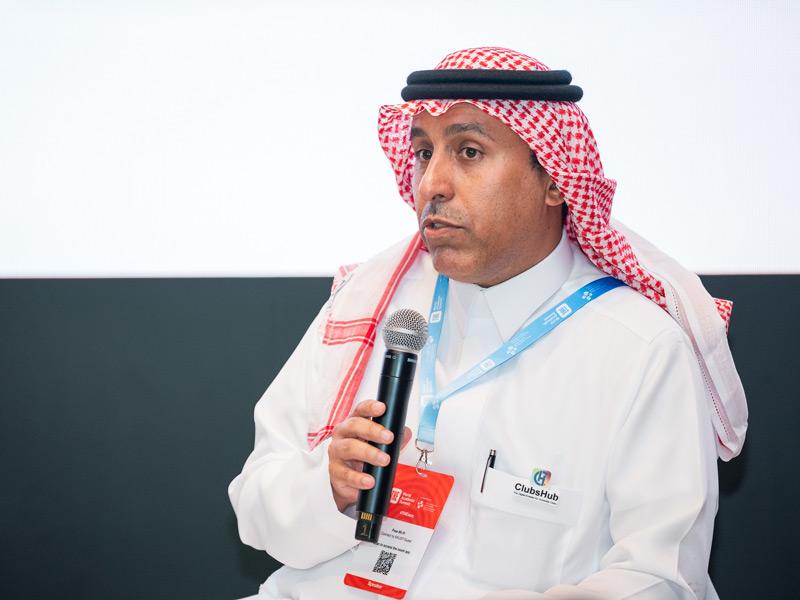
Student clubs are an important part of the university experience. By using technology, universities can modernise student clubs and expand their reach and influence to strengthen academic communities. A panel discussion, held in partnership with ClubsHub during the 2025 THE World Academic Summit, discussed the impact of student clubs and strategies for measuring their success effectively. The session explored how aligning clubs with national and international frameworks for sustainability can help institutions and students boost their social impact.
Bader Rajab, founder and CEO of ClubsHub, spoke about the positive impact student clubs can have in enhancing student skills and engagement. ClubsHub offers club management solutions to streamline community building and professional networking. It is designed to equip students with the tools and resources they need to create dynamic and successful clubs at universities.
Mohammed Alduaiji, head of the Sustainable Development Unit at Saudi Arabia’s Ministry of Education, said that initiatives such as Saudi Vision 2030 and the United Nations’ Sustainable Development Goals can be better reflected in the activities of student clubs. “We need to empower university clubs to become incubators for community and innovation,” said Alduaiji.
However, student clubs worldwide face several challenges, such as weak alignment between strategy and action plans, and the lack of a clear framework to bring clubs together under one purpose and a shared set of values. Additionally, there are no effective tools and mechanisms for measuring the impact of student clubs.
In 2020, Rajab started exploring solutions to these issues through ClubsHub. The platform not only helped clubs and their members connect with the private sector and government initiatives but also identified and solved some of the common challenges.
After a student graduates, their club achievements and activities remain on ClubsHub. This is useful for demonstrating their achievements and skills and helps their successors maintain club operations as details of their organisational efforts are accessible through the platform. It also enables them to connect with other clubs within and outside the institution.
Yasmeen Rashidi, dean of student affairs at Umm Al-Qura University in Saudi Arabia, spoke about how the university established an “integrated cycle of student clubs management” using ClubsHub. “We saw tremendous passion but scattered efforts. Each club was doing such a great job, yet its achievements were not visible.” With the support of ClubsHub, the university has transformed its clubs into a landscape of empowerment.
“We can now manage hundreds of activities in one place and improve efficiency and transparency,” said Rashidi. “We can also measure outcomes that affect our sponsors and strengthen our accreditation agenda and evidence. What used to be just student activities is now more digital transformation and sustainability.”
The panel:
- Mohammed Alduaiji, head of the Sustainable Development Unit, Ministry of Education, Saudi Arabia
- Bader Rajab, founder and CEO, ClubsHub
- Yasmeen Rashidi, dean of student affairs, Umm Al-Qura University
Find out more about ClubsHub.

comment