Teaching and learning

By Anonymous (not verified) , 6 October, 2021

Best practice pedagogy for online, blended and in-person university teaching. Educators from universities around the world share advice, insight and experience on effective instructional design, teaching styles, assessment, boosting student engagement, classroom management and ensuring students achieve those all-important learning outcomes.

 

By Laura.Duckett , 10 August, 2026
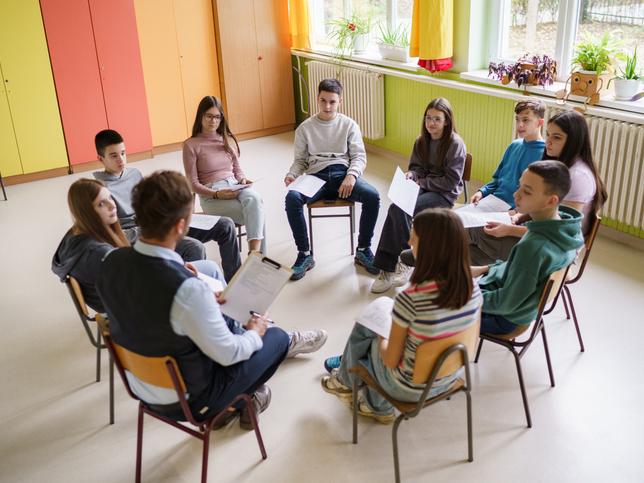
Carefully designed device-free lessons can help students learn to articulate their thoughts, engage with peers and brainstorm ideas. Learn how
Reading time
4minutes
By Eliza.Compton , 10 August, 2026
Future teachers, nurses, engineers, lawyers and business leaders need more than rules and policies about when to use AI. Inexperienced students benefit from courses that help them practise responsible judgement alongside foundational learning
Reading time
4minutes
By Eliza.Compton , 8 August, 2026
Can a theatrical approach to teaching a dry subject free up brain space? Chris Jones uses cognitive load theory to manage when students’ attention drifts
By Laura.Duckett , 7 August, 2026
By turning your classes into ‘interaction rituals’, you could re-energise even the most apathetic of students – and yourself – and spark excitement for learning. Allan McCoy explains how
Reading time
4minutes
By kiera.obrien , 5 August, 2026
Are your students struggling with role play? Game-based learning can offer structure, safety and feedback, especially when combined with AI support. Here’s how
Reading time
5minutes
By kiera.obrien , 31 July, 2026
Instead of attempting to predict the future, future-proofing online courses is about making them easier to update, more inclusive and more useful to students, even as context changes
Reading time
4minutes
By Laura.Duckett , 30 July, 2026
Pharmacodynamics is one of the more difficult topics when educating students about the complexities of prescribing medicines. But parallels with sexual attraction and rivalry offer a low-tech way to ease learning apprehension

Reading time
4minutes
By Eliza.Compton , 27 July, 2026
It’s not just about kicking AI and other technology out of the university classroom. A return to analogue teaching methods requires preparation in order to reap the benefits of deeper learning and engagement, writes Jose Eos Trinidad

Reading time
5minutes
By miranda.prynne , 7 July, 2026
If we want to engage students, we must reuse and regenerate their attention rather than take, make and waste it, writes Christine Rivers, who shares advice on how to do this
Reading time
4minutes
By Laura.Duckett , 6 July, 2026
Quarantining can make medical exams fairer, but evolving needs and limited resources raise questions about viability. Rebekah Hill and Sarah Amadasun draw from student feedback to offer solutions
Reading time
4minutes
By miranda.prynne , 3 July, 2026
When a student’s work sparks concerns over AI use, the best approach is to sit down with them and have a conversation to ascertain if they understand what they submitted, explains B. Jean Mandernach, who shares tips for doing this
Reading time
4minutes
By miranda.prynne , 1 July, 2026
Trying to detect whether a student has misused AI in their work is a wasted effort, from which no one benefits, writes B. Jean Mandernach. She proposes a different approach focused on finding out what students truly understand
Reading time
4minutes
By Laura.Duckett , 30 June, 2026
Common in primary and secondary teaching, starter and plenary activities can get students interested and build knowledge. Paul Demetriou explains how to use them in university teaching
Reading time
5minutes
By Laura.Duckett , 17 June, 2026
Comments such as ‘This is a good essay’ might reassure but won’t help a writer improve. Here’s how to show students what strong and weak peer feedback looks like
Reading time
4minutes
Sponsored
No