

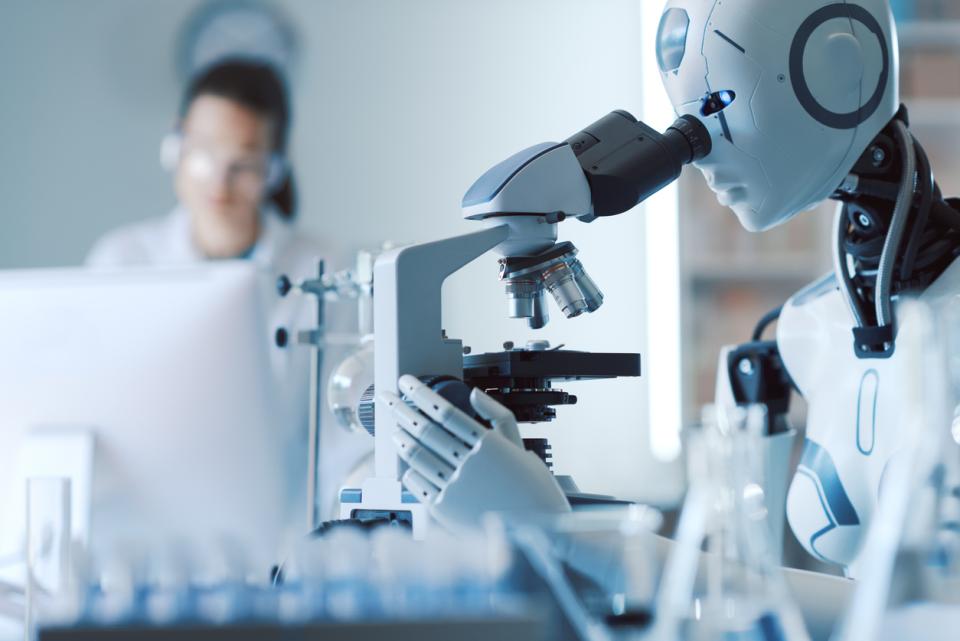
From robotic pipettes to intelligent data analysis tools, GenAI tools are now part of day-to-day lab work. They make experiments quicker, more accurate and more efficient. But as machines take over many of the routine tasks, it raises an important question: are we losing something valuable in the process? Are young scientists missing out on essential hands-on experience, something that has long been at the heart of learning how to do science properly?
Traditionally, lab training meant rolling up your sleeves and doing everything yourself: measuring, pipetting, running gels, looking through microscopes. These tasks weren’t just mechanical steps; they helped researchers develop a real understanding of how experiments work. These days, more and more research labs are using machines to do the work that people used to do by hand. Robots are now handling entire experimental procedures that used to be done manually. Yes, it saves time and reduces human error, but it also changes how people learn science.
- Don’t cry for me, academia: gamifying the early career experience
- Spotlight guide: GenAI as a research assistant
- How we reassure accounting students that AI won’t take their jobs
Instead of physically preparing samples or troubleshooting transfer issues, many young researchers simply set up the machine, press “start” and wait for results. That might seem efficient, but the trade-off is that they often don’t get to understand the “how” or the “why” behind each step. This lack of direct experience can create a knowledge gap.
Let’s take Western blotting as an example. It’s not just pushing a button and waiting for bands to appear; it’s a layered process. You start by separating proteins using gel electrophoresis, then transfer them onto a membrane and finally use antibodies to detect what you’re looking for. When you do it manually, you pick up on all sorts of little things: how the gel behaves, how to time the run just right, how to keep air bubbles from ruining your transfer or how some antibodies are trickier than others. These aren’t things you pick up from a diagram. They come from experience, from being in the lab and doing it.
And there’s something else that develops over time: scientific intuition. It’s that gut feeling that tells you when something doesn’t quite add up, even if everything looks okay on the surface. That kind of instinct is built slowly, through repetition, through learning from small errors and weird results.
But if machines take over all the messy parts, where’s the room for that kind of learning? Without those moments, researchers might not develop the confidence or judgement they need when something unexpected happens.
There’s also a quieter shift happening. As labs lean more on automation, scientists might start choosing research questions based on what’s easy for machines to process. They may steer away from messy, high-risk ideas – not because those ideas aren’t valuable, but because they don’t fit into the neat, streamlined workflow automation prefers.
Sure, GenAI and machines can handle huge amounts of data and make research faster. But they can’t replace the spark of human insight or the creative leaps that come from experience and curiosity.
How to balance automation with knowledge
This doesn’t mean automation is a bad thing. Used the right way, it can be a great tool for scientific training. The trick is balance. Give new researchers time to learn the ropes by doing things manually. Let them get their hands dirty, make mistakes and really understand each step. Once they’ve built that solid base, bring in the tech. And even then, make sure the machines don’t turn into black boxes. Let users follow along with what’s happening, get feedback and stay connected to the process. That way, automation becomes a part of learning, not a shortcut around it.
Mentors are the key to making all this work. Experienced scientists have a responsibility to guide younger researchers, not just through the steps of a protocol, but through the thinking behind it. They need to show when and where human judgement is crucial, even in a lab filled with smart machines.
There’s no denying that automation has its perks: it speeds things up and often delivers more consistent results. But it pushes us to rethink how we train the next generation of scientists. To keep developing researchers who are not only technically skilled but also curious, thoughtful and innovative, universities and labs need to be deliberate about how they mix technology with mentorship and hands-on practice. Because the real strength of science doesn’t come from machines alone – it comes from people who truly understand how to use them with purpose and insight.
Mohamed Hussein is assistant professor of biochemistry at Dubai Medical University.
If you would like advice and insight from academics and university staff delivered direct to your inbox each week, sign up for the Campus newsletter.

comment