



How to manage high-impact, collaborative research? International research institutions can often have conflicting motivations and measures of success from one another, even when working towards a common goal. Factor in government departments and consulting firms, which have their own briefs, and an already complicated project becomes vastly more convoluted.
Juggling this can be as tricky across international borders as between faculties in one university. Here, we’ll outline how our research into floating cities – critically important and technically complex – has helped us develop strategies for keeping all the balls in the air.
Aligning conflicting motivations through global frameworks
Managing a project where members have their own motivations and success metrics requires a unifying mission. One of the most effective ways to align a diverse team is to anchor the collaboration in global standards.
- Make the United Nations’ Sustainable Development Goals your baseline: Ensure all project activities are carefully planned and undertaken so that efforts are closely aligned with the SDGs.
- Establish regular communication: Effective internal communication is particularly crucial for ensuring that all technologies used in a project, such as those in our sustainable and smart floating structure solution, are well integrated.
- Co-ordinate across faculties: Meet and communicate regularly to ensure that the work of members from different backgrounds remains synchronised toward the final objective.
Structuring interdisciplinary expertise
The design of a project like ours is highly complex and multifaceted. To manage this, we leveraged interdisciplinary and cross-sectoral collaboration to address various technical and implementation considerations. In our experience, fostering effective interdisciplinary collaboration requires organising researchers into specialised working groups right from the project’s outset. For example:
- Modular floating structures, which rely on the combined input of materials scientists, structural engineers, construction managers and AI experts;
- Novel floating breakwaters integrated with renewable energy generation, which bridge the gap between structural engineering, hydraulics and renewable energy;
- Anti-biofouling for floating structures, which requires close co-operation among materials scientists, biologists and construction engineers.
Managing different groups and outcomes
To manage multiple work streams effectively, specific groups (such as engineering and biology) within our team worked in parallel rather than in a strictly sequential order. This approach allowed us to make progress simultaneously across different areas, which not only improved efficiency but helped us identify interdisciplinary dependencies much earlier in the process.
- Equitable research partnerships are no longer optional – here’s how to make them a reality
- Connect and catalyse: international collaborations in the semiconductor field
- Spotlight guide: How to advance collaboration across higher education
For example, in developing a floating solution, early parallel input from both engineering (for example, materials, structures, construction) and ecological perspectives (biology) ensured that material selection and structural design could meet technical performance requirements, while also supporting environmental sustainability goals (such as biodiversity).
Overall, this parallel workflow enabled faster iteration and reduced bottlenecks and led to more integrated, well-rounded outcomes compared with a linear process.
Working across institutions and countries
Given that the collaboration involved researchers from different universities and countries, maintaining alignment required a structured yet flexible communication approach.
Key practices included:
- Use of shared cloud-based platforms for real-time document access and version control
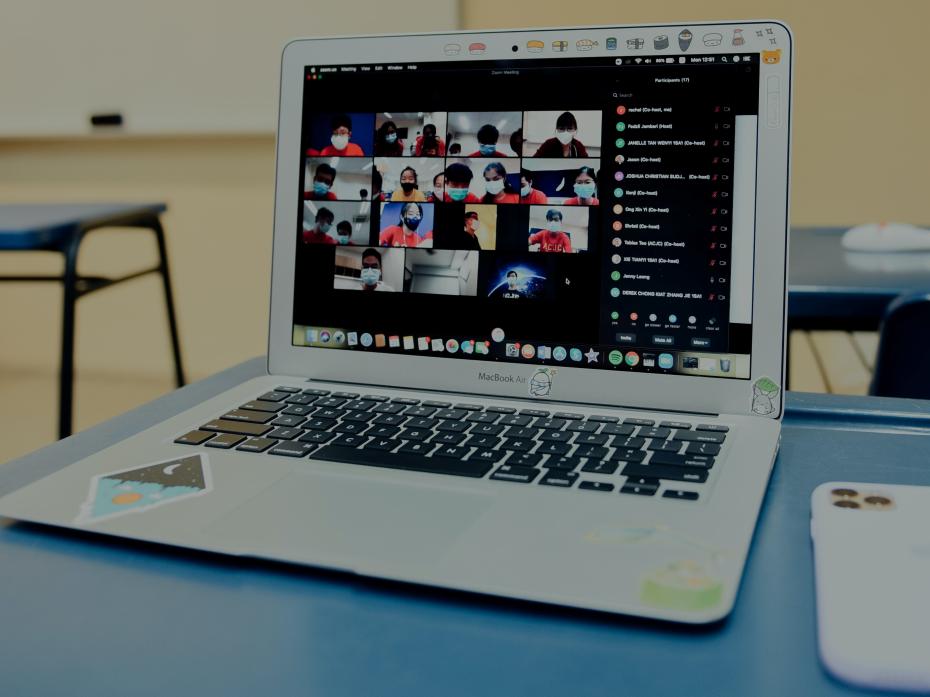
- Regular virtual meetings to coordinate progress and resolve issues
- Annual face-to-face workshop to strengthen cohesion and friendship among key team members
- Ongoing check-ins to maintain clarity and continuity across time zones
These measures helped ensure that all contributors remained aligned despite geographical distance, and supported a cohesive and efficient collaboration process.
Engaging external stakeholders and international pioneers
Research on this scale is not just about collaborating with other academics. A successful project must work closely with diverse external parties, including industry, relevant government departments and local and international consulting firms.
These collaborations should aim at raising awareness of the solution, and finding economical and environmentally responsible methods in developing a viable outcome. To move the argument forward, organise talks in which pioneers from other countries are invited to share related experiences and insights.
For example, inviting experts from the Netherlands, a pioneer in developing floating cities, provided us with invaluable lessons. The Rotterdam floating pavilion showcased the state-of-the-art technologies involved in its energy, utilities and wastewater treatment system, and we also learned from the floating school at Makoko in Lagos, Nigeria to demonstrate social responsibilities.
We also engaged in professional exchange activities such as workshops, seminars and international conferences, such as the 4th World Conference on Floating Solutions, which allowed the research unit to share its latest work and build connections for further collaboration.
Moving toward a sustainable future
As governments, industries and communities seek to meet the SDGs by 2030, floating structures will play a pivotal role in reshaping cities and societies to be more resilient, inclusive and ecologically sound. Our duty as researchers is to harness the power of collaborative efforts and work towards a more sustainable, adaptive future.
Xiao-Lin Zhao is associate director of the Research Institute for Land and Space at The Hong Kong Polytechnic University and Chien-Ming Wang from the University of Queensland is a member of the international advisory committee of the institute at PolyU.
If you would like advice and insight from academics and university staff delivered direct to your inbox each week, sign up for the Campus newsletter.


comment