

I came to Hungary for my master’s degree, and I initially struggled to secure a position in a laboratory. So, as a freshly graduated student without lab experience, I chose to enter industry. It quickly became clear, though, that even though I gained valuable professional insight, this path didn’t offer the sense of purpose or fulfilment as scientific research in academia. Working on incurable diseases through a pharmaceutical lens is what motivates me. For me, laboratory and research topic – whether that’s cancer or neurodegenerative disorders – both matter.
After gaining experience in both industrial and institutional research settings, I applied for PhD training at Semmelweis University. Alongside my research, I am deeply committed to teaching because I find genuine joy in guiding students and witnessing moments of understanding. I am ultimately pursuing a career that combines both research and education, contributing to science while also helping shape the next generation of scientists.
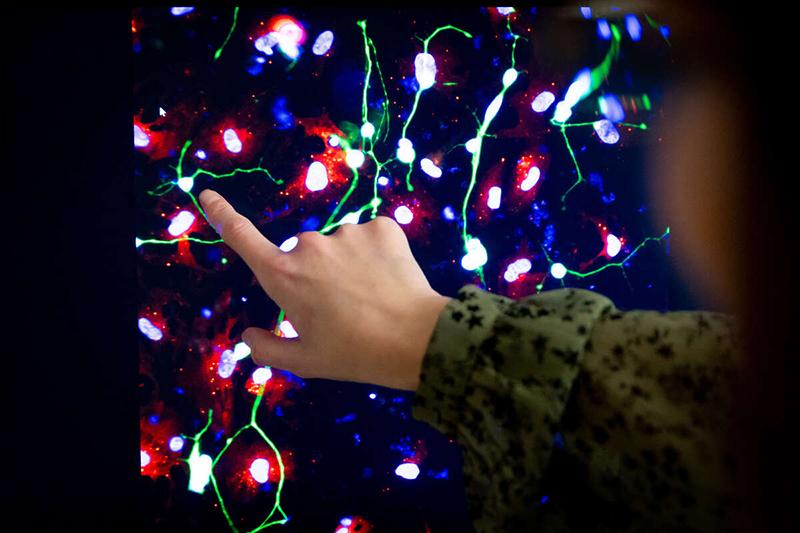
I study Huntington’s disease in a research environment where laboratory work is closely connected to clinical trials. Working with patient‑derived induced neurons allows me to see how experimental findings may translate into real therapeutic impact, which strongly motivates my daily work. Although my engineering background has provided a strong technical foundation, the complexity and uncertainty of neuroscience continues to challenge me to think beyond structured training.
Learning patience the hard way
There is a misconception that success drives research. In reality, it is patience and precision. Neurons are delicate, unpredictable and needy. Experiments fail for reasons you may never know. Long weeks of work can be lost to contamination or technical issues.
Early in my PhD, the first moment of real frustration came when a month-long neuronal culture experiment collapsed overnight as a result of contamination, an outcome I could neither predict nor fully explain. Losing weeks of work in a single moment forced me to confront how unpredictable biological systems are and how essential patience is in research. You can do everything by the book and still the contamination is there. I am a perfectionist, so the first contamination was like a slap in the face. Over time, I have learned to manage this frustration by stepping back, sometimes taking a walk to clear my mind, sometimes discussing the issue with colleagues, and often retracing every step of the protocol to understand what went wrong.
- Academia can never be ‘just a job’ (and why that is OK)
- Spotlight guide: Redefining success in academia
- Claim your narrative in academia by building a ‘golden thread’
Sometimes, antibodies or experiments do not work; I usually blame the weather or the phase of the moon but that definitely does not explain the failure. But this is biology, we need to face it. These experiences have taught me that persistence is not about repeating the same experiment blindly but about digging into the problem until the underlying issue becomes clear, raising new questions and accepting that uncertainty is part of the scientific process. As I gained experience, my reactions shifted from emotional responses to a more systematic approach, treating failed experiments not as setbacks but as data that guides the next step. Every person reacts differently to failure, but a clear mind and detective skills are needed.
An often overlooked yet essential skill for every researcher is an unwavering commitment to integrity. In the scientific community, a researcher’s reputation is one of their most valuable assets. It is built not only on the novelty of their findings but on the honesty and transparency with which those findings are obtained and presented. Maintaining integrity means reporting methods and results exactly as they are, without distortion or selective omission. Negative or inconclusive results are still legitimate scientific outcomes; they contribute to collective knowledge, prevent duplication of effort and help refine future hypotheses.
Unfortunately, in recent years there have been numerous cases in which data manipulation or falsification was used to secure funding or achieve publication. Such actions not only undermine the credibility of the individuals involved but erode trust in the whole scientific enterprise. For early career researchers, the message is clear: safeguarding data integrity is not optional, it is foundational. Presenting authentic, unaltered data is essential for building trust, advancing science responsibly and ensuring long‑term standing within the research community. Upholding these principles protects both the integrity of the scientific record and the integrity of the researchers themselves.
You can’t do research alone
My scientific path began nearly 15 years ago, during a visit to US research laboratories; an experience that shaped my commitment to biology. One of the most important lessons I have learned along the way is that research cannot be done alone. A good mentor and a collaborative group are essential for growth, resilience and scientific progress. Finding a supervisor who brings out the best in me has been transformative; it enabled achievements such as receiving an innovation award, contributing to a patent and publishing strong early career work. These successes are the result of the guidance of my supervisor, Karolina Pircs, and the supportive research community around me.
Ultimately, what sustains my commitment to science is not only the hope of contributing to future therapies for neurodegenerative diseases but the knowledge that I am part of a collective effort – one built on curiosity, patience and the people who help us move forward. Just as integrity safeguards the credibility of our work, collaboration strengthens the foundation on which meaningful science is built.
Kinga Vörös is a PhD student in the HCEMM-SU Neurobiology and Neurodegenerative Diseases Research Group, which is part of the Institute of Clinical Pathophysiology at Semmelweis University, Hungary.
If you would like advice and insight from academics and university staff delivered direct to your inbox each week, sign up for the Campus newsletter.


comment