

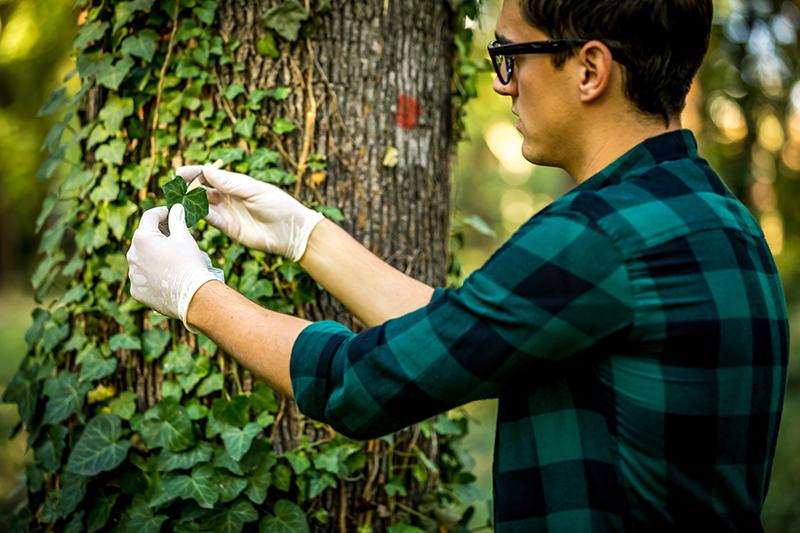
As an invasive plant ecologist, I study problems that refuse to stay within disciplinary boundaries. Invasive species were once viewed primarily as ecological problems. Today, we understand they are complex socio-ecological ones. As people move species around the globe – sometimes intentionally, sometimes accidentally – we are not only responsible for their introduction, but we eventually bear the economic costs, experience the environmental consequences and ultimately decide how these plants are best managed.
No single discipline can solve problems such as the ones presented by invasive species. Ecologists have to be part of the team tackling these issues, but so too must researchers from economics, engineering, communications, public policy and the social sciences. Every meaningful advance depends on bringing together people with different expertise.
- What the movement to integrate the arts and health can teach us about making research matter
- Don’t just assemble an interdisciplinary research team, design one
- The interdisciplinary benefits of navigating a medical PhD as an engineer
Over the years, I’ve learned important lessons when it comes to interdisciplinary research. The first challenge isn’t usually scientific – it’s squarely human. Assembling a multidisciplinary team is the easy part; building a collaborative one can be much more difficult.
Remember the human factor in interdisciplinary collaboration
Early in my career, I assumed that collaboration would happen naturally if you gathered smart people around an important problem. I quickly discovered that wasn’t true.
Different disciplines don’t just bring different expertise; they bring their own assumptions, priorities and, sometimes, languages. Even a word as seemingly straightforward as “resilience” can mean something different to an ecologist, an engineer and a social scientist. If we don’t establish a shared understanding from the outset, we risk talking past one another before we’ve even begun.
That’s why I’ve become convinced that the most important investment in any interdisciplinary project is made around the – proverbial – table. When we begin new collaborations through Virginia Tech’s Invasive Species Collaborative, for example, we spend time getting to know one another before dividing up the work. We talk through the problem, clarify assumptions and establish a common vocabulary. Just as importantly, we build relationships.
That may feel like a slow start, but I’ve found it accelerates everything that follows. Relationships bring trust, and trust makes it easier to ask questions, challenge assumptions and navigate disagreement. It also reminds us that our collaborators are more than experts in a particular discipline, they’re people working towards the same goal. I like to remind us of that right from the onset. Outlining the overall goal can alleviate issues down the road when we are reminded of why we are working together in the first place.
Select the ‘right’ collaborators
I’ve also become more intentional about who I invite into collaborations. Technical expertise is essential, but it isn’t sufficient. The problems we’re trying to solve are too important to be sidetracked by ego or competition. I look for collaborators who are curious, generous with their knowledge and willing to listen as carefully as they speak. Those qualities create the kind of environment where the best ideas emerge.
Perhaps the greatest gift – and biggest joy – of interdisciplinary research is that it teaches us humility. Working with colleagues from other disciplines regularly reminds me that my own field doesn’t have all the answers. Every collaboration challenges assumptions I didn’t even realise I held, and in turn it broadens my thinking. More often than not, the best ideas emerge from conversations where someone asks a question I never would have thought to ask.
Make research accessible
That willingness to learn from one another also changes how we communicate beyond academia. Some of the most rewarding parts of my career have involved working with policymakers, public agencies and community partners. Those experiences have reinforced that our responsibility doesn’t end when the research is complete. If we want our work to improve people’s lives, we have to make it understandable and useful to the people making decisions.
That’s why I encourage my collaborators and my students to think beyond journal articles. Extension publications and presentations, public-facing summaries and conversations with practitioners are often where research has its greatest impact. Making science accessible isn’t about oversimplifying it. It’s about ensuring the people who need it can use it.
Bring together varied perspectives
I’ve seen an interdisciplinary mindset emerging in today’s students. Many are less interested in staying within traditional disciplinary boundaries than previous generations. They want to tackle problems that don’t fit neatly into a single field, and they recognise that meaningful solutions require many perspectives. I find that encouraging because the challenges ahead – whether they’re environmental, technological or social – will demand exactly that kind of thinking.
Interdisciplinary research is often described as bringing together disciplines. I think it’s more accurate to say it’s about building community. When we take the time to build relationships, develop a shared language and remain genuinely curious about one another’s perspectives, something remarkable happens. We stop trying to prove that our discipline has the answer and start discovering answers none of us could have found alone.
If our goal is truly to improve the human condition, that may be the most important lesson interdisciplinary research has to teach us.
Jacob Barney is a professor of invasive plant ecology in the College of Agriculture and Life Sciences and director of the Invasive Species Collaborative at Virginia Tech.
If you would like advice and insight from academics and university staff delivered direct to your inbox each week, sign up for the Campus newsletter.


comment