

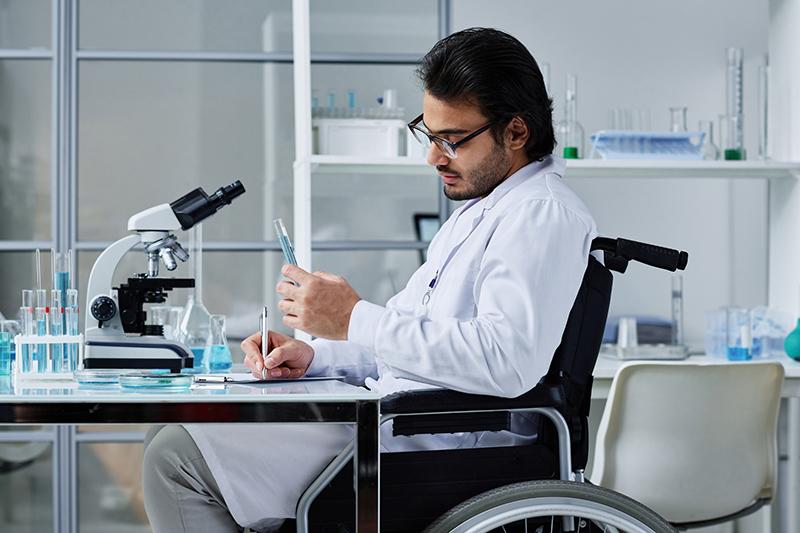
Place-based learning, fieldwork and laboratory work are widely recognised as enhancing students’ conceptual understanding, professional skills and student engagement. They connect students with local environments, communities and cultural contexts.
However, these learning modes often present significant physical barriers for students with mobility impairments, chronic health conditions, sensory disabilities and other access needs. Uneven ground, lack of ramps or accessible pathways, inaccessible public transport and absence of rest facilities can all limit participation. Physical accessibility, then, is central to educational equity, student retention and academic success.
In field-based disciplines (such as civil engineering, geology, environmental science, geography and biology), aspects like physical terrain, transportation logistics, equipment design and time constraints often intersect to create conditions that exclude students with disabilities. But when learning environments are designed proactively rather than retrofitted, barriers are reduced for all learners. To be most effective, accessibility should be integrated into planning from the earliest stages of curriculum design. The literature consistently situates accessibility within broader frameworks such as universal design for learning (UDL), inclusive pedagogy and social models of disability.
Accessibility in place-based learning
Students with disabilities are frequently offered alternative assignments rather than equivalent experiential opportunities. Alternatives for place-based learning, however, may not provide comparable skill development or professional networking benefits, even if they meet minimal academic requirements.
- How to create a virtual field trip
- Campus Talks podcast: Why small changes make a big difference to accessibility in higher education
- Spotlight guide: Make learning accessible to all in higher education
Best practices identified in the literature include advance site audits, collaboration with disability support offices, risk assessments that consider diverse mobility needs, flexible scheduling and provision of assistive devices. Technological supports such as GPS-enabled mapping tools, virtual site previews and hybrid participation models have also been shown to enhance inclusion when physical presence is partially constrained.
Scholarly evidence suggests that role diversification during field activities allows students to contribute meaningfully according to their strengths. For example, students may rotate among data recording, instrument calibration, digital mapping, analysis and coordination roles. Such flexibility benefits entire cohorts, not only those with identified disabilities. Transparency in communication about terrain, physical expectations and contingency plans increases student confidence and participation rates.
Accessibility in laboratory work
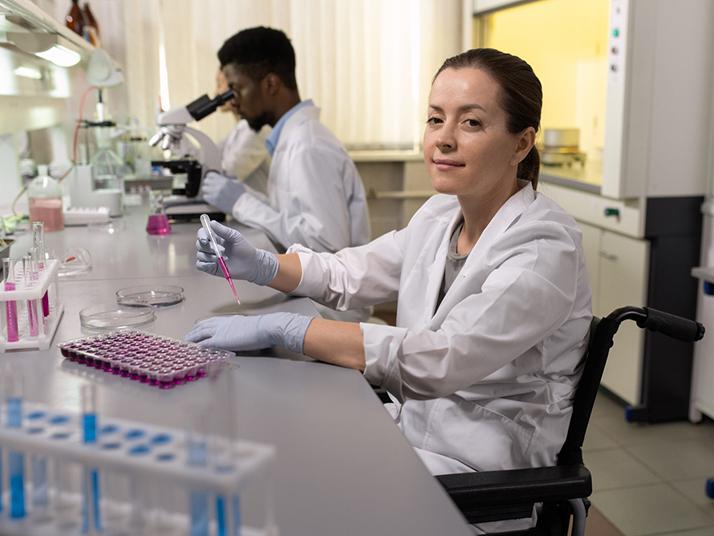
Laboratory environments may appear more controllable than outdoor settings, yet research demonstrates persistent structural barriers here, too. Fixed-height benches, inaccessible fume hoods, tightly spaced equipment, heavy apparatus and safety protocols designed without inclusive consultation can restrict participation. Studies in chemistry, engineering and biomedical sciences indicate that adjustable workstations, seated lab configurations, voice-activated interfaces and modified safety equipment significantly improve access.
Furthermore, time-restricted lab sessions can disadvantage students who require additional time for mobility, set-up or assistive technology use. Flexible lab scheduling and inclusive safety training modules are consistently recommended across higher education research.
Faculty can conduct accessibility audits before finalising field or lab plans. They can:
- provide detailed pre-visit information, including terrain, duration and physical demands
- ensure adjustable furniture and adaptive equipment in laboratories
- offer flexible participation models without compromising learning outcomes
- involve students in co-designing inclusive experiential learning activities
- allocate dedicated budget lines for accessibility improvements.
Policy, ethics and institutional responsibility
Institutional commitment must extend beyond infrastructure to include faculty development, funding for adaptive equipment and systematic review mechanisms. Inclusive design policies can boost student satisfaction and improve progression rates among students with disabilities.
Importantly, students with disabilities should not be viewed as logistical problems, but as contributors whose perspectives enrich disciplinary practice. Participatory design approaches, where students are consulted in planning field and lab experiences, are associated with more sustainable accessibility solutions.
Recent scholarship highlights the role of digital technologies in expanding access. Virtual field trips, remote sensing data platforms, augmented reality simulations and hybrid laboratory models can complement – not replace – physical engagement. When integrated thoughtfully, these tools provide layered access pathways and resilience against environmental or infrastructural constraints.
Embedding equity in place-based learning
The cumulative evidence from a vast and interdisciplinary research base makes clear that physical accessibility in place-based learning, fieldwork and laboratory education is essential for academic equity and professional preparation. Inclusive design enhances learning outcomes for all students, strengthens institutional reputation and aligns with contemporary expectations of social responsibility. Moving forward, institutions must treat accessibility as an integral dimension of pedagogical excellence rather than an afterthought.
P. Shiva Kumar is an assistant professor in the department of civil engineering at Aditya University, India.
If you’d like advice and insight from academics and university staff delivered direct to your inbox each week, sign up for the Campus newsletter.


comment