

Biology and electronics have been my passions since I was a teenager, but I chose to pursue a career in engineering, rather than medicine, because of the sense of creativity and freedom it offered. Throughout my studies, however, I continued to bridge these disciplines, focusing on medical instruments and biomedical electronics.
After completing a master’s degree in electrical engineering, and driven by a strong research and development mindset, I joined the clinical medicine PhD programme at Semmelweis University. I wanted to challenge my perspectives as a certified electrical engineer while gaining a deeper understanding of that field across different clinical situations.
As a member of a group focusing on aortic diseases, my main project has been developing a piece of surgical planning software designed for complex abdominal aortic aneurysm stent graft procedures. The transition from engineering to clinical research was a steep learning curve, but it also allowed me to see problems from a completely new angle.
- How to make interdisciplinary teaching a reality
- To get started with interdisciplinarity, ask: what’s the problem?
- Spotlight guide: How to advance collaboration across higher education
Based on my journey, here is advice on how researchers can navigate interdisciplinary research and foster innovation.
Make the most of being an ‘outsider’
When a researcher enters a new academic field, they bring a problem-solving toolkit that may be novel to their new discipline. This fresh perspective might identify technical solutions to problems that clinicians, for example, or other subject-matter experts have accepted as unavoidable obstacles.
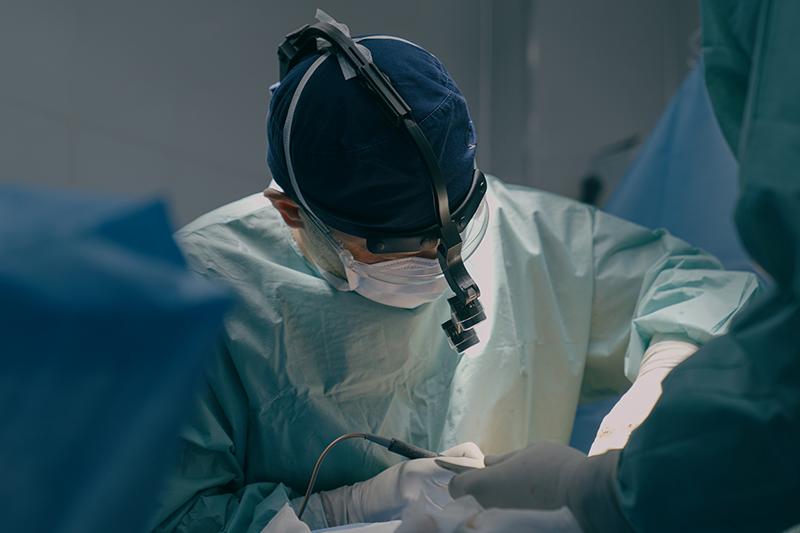
For my medical research, I focused on the challenges of vascular surgery. From a surgical standpoint, treating an aneurysm endovascularly with a stent graft is a complex procedure where the surgeon does not have a direct view of the surgical site and must rely solely on imaging devices. Furthermore, the shape and location of an aneurysm can vary greatly from patient to patient, and because of that, the physician may need to manually modify the original manufactured stent graft. This is what we call physician-modified endograft (PMEG). The field of study is still in its early stages, which is why everyone worldwide uses their own methods for planning the surgery and performing the modification on the stent graft.
As an engineer, I viewed this clinical challenge as a spatial and geometric puzzle. This perspective helped me develop software that can simulate the surgery in advance, tailored to the patient’s anatomy, to determine the exact size, placement, possible modification locations and type of the stent graft to be implanted.
Advice: Do not let your initial lack of domain-specific knowledge intimidate you. Use your “outsider” status to pose the basic questions that specialists may have stopped asking.
Team up with experts outside your field
No matter how well founded your knowledge, you cannot build effective medical software in an engineering office alone. Success requires constant feedback and integration with end-users (in my case, physicians). Working under the supervision of a medical professional provided the vital clinical context I needed.
Advice: You should absolutely bring your own ideas to a project, but always ask for feedback to see if your idea is relevant in the context where it will be used. If you are an early career researcher, find a supervisor and a research group that actively support interdisciplinary work.
Design tools for both research and education
A key goal for university-driven digital transformation should be multipurpose utility. We designed our software not only to assist specialists with surgical planning but also as an accessible tool for education.
By loading a patient’s CT scan into the software, an instructor can show students a 3D model of what a stent graft placement looks like and how the device would be positioned and fitted.
Advice: When developing new technologies, consider their educational potential from day one. Think about how your research output can be brought into the lecture hall or seminar room to benefit students.
Make innovation accessible and turn open access to your advantage
From an academic perspective, making innovations, such as a new software-based method, available open access is highly advantageous. It significantly enhances reach and readership, making the associated research much more attractive to high-impact journals.
When we updated the software, we made its new features freely available for global educational and research purposes, democratising access. Capabilities such as 3D spatial planning, automatic simulation, vascular enhancement and spatial modification directly from uploaded CT scans previously required costly, specialised licences. This means the software can now be used for any endovascular procedure.
Advice: Look for ways to share your digital tools with the broader academic community. Open access or free-for-research models can rapidly accelerate the adoption of your work and create international collaboration.
Engage with institutional support early
Turning a research project into a widely used tool requires institutional backing. Our software was recognised as an intellectual creation by the university innovation committee, and the name EndoDraft was trademarked. We also published a retrospective clinical trial detailing the software in the Journal of Endovascular Therapy.
Advice: Do not treat administrative and innovation offices as an afterthought. Engage with your university’s technology transfer and innovation committees early in your project to protect your intellectual property and build credibility.
Merging engineering with clinical medicine has not been a straight line, but for me, it is deeply rewarding. By embracing interdisciplinary collaboration and maintaining a focus on real-world clinical and educational needs, researchers can create innovations that truly push higher education and medical science forward.
Bendegúz Juhos is a certified electrical engineer and a PhD student in the department of interventional radiology of the Városmajor Heart and Vascular Center at Semmelweis University, Hungary.
If you would like advice and insight from academics and university staff delivered direct to your inbox each week, sign up for the Campus newsletter.

comment