

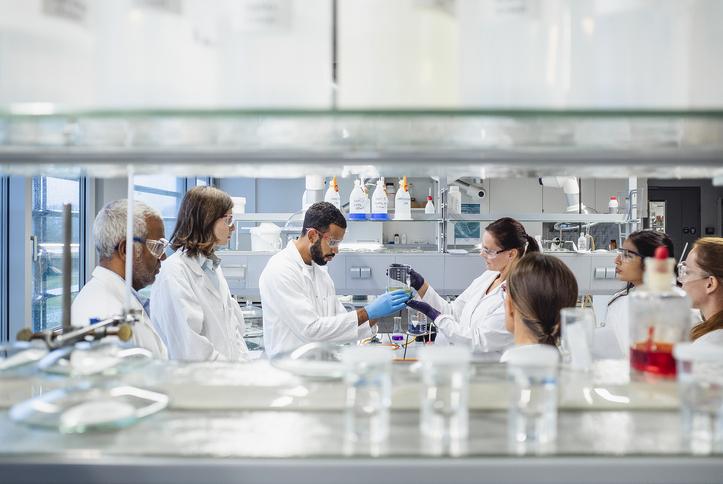
University laboratories are too often treated as support facilities working quietly in the background. But that view no longer reflects the reality of higher education.
In a modern research-intensive university, laboratories sit at the centre of teaching, research, industry collaboration, safety, sustainability and talent development. They influence the quality of research outputs, the confidence of industry partners, the readiness of students and the university’s ability to translate knowledge into real-world value.
A laboratory is no longer just a room filled with instruments. It is part of the university’s academic and research infrastructure. Like any critical infrastructure, it needs proper governance, competent people, trusted systems and a clear sense of purpose.
- How living labs bridge the gap between the classroom and the real world
- Greener lab practices in higher education
- Rethinking laboratory design for accessibility
The next stage of laboratory excellence is not simply about adding more advanced equipment. It is about building a laboratory ecosystem that can support science reliably, safely and sustainably.
Think beyond equipment
Many universities are proud of their high-end laboratory instruments, and rightly so. Advanced equipment can open doors to new research, stronger publications, postgraduate training and industry collaboration.
But equipment alone does not make a laboratory excellent.
A sophisticated instrument without preventive maintenance will eventually become a liability. A powerful analytical technique without competent personnel can yield questionable results. A laboratory lacking proper safety controls can expose users to unnecessary risk. A testing service without traceability and customer feedback may struggle to earn long-term confidence.
We need to shift the question from “What equipment do we have?” to “What ecosystem supports the equipment?”
That ecosystem includes quality systems, safety governance, trained personnel, equipment reliability, digital platforms, documentation control, user management and continuous improvement. When these elements work together, the laboratory becomes more than a facility – it becomes a strategic platform.
Build quality into daily culture
Accreditation is an important mark of credibility. Standards such as ISO/IEC 17025 provide confidence that laboratory work is technically competent, traceable and comparable. They are especially important when laboratories support industry, regulatory work or research that requires reliable data.
Yet accreditation should not be treated as the final destination.
The real value of quality lies in daily practice. How methods are validated, equipment is calibrated, records are maintained, audit findings are addressed and customer feedback is used for improvement all demonstrate quality.
Rather than preparing for quality only when an audit is on the horizon, a mature laboratory makes quality part of everyday behaviour.
This matters because university laboratories serve many types of users: undergraduate students need exposure to laboratory techniques; postgraduate researchers require reliable data for publications; researchers need dependable facilities for grants and consultancy; industry clients need timely, accurate and defensible results.
They all share one common requirement: trust. Quality is what creates that trust.
Make safety visible
Laboratory safety is often associated with policies, procedures and compliance documents. For institutions operating under structured safety management systems such as ISO 45001, these are necessary requirements, but they are not enough.
Safety must be visible: in how chemicals are stored, waste is managed, safety equipment is inspected, risk assessments are understood and people behave when working in the laboratory. It must be reinforced through drills, walkabouts, signage, training and leadership presence.
In a university setting, where laboratories are also learning space, this is particularly important. Students and researchers do not only conduct experiments; they develop habits. If safety is inconsistent, they may carry that mindset into their future careers. But if safety is clear, consistent and well explained, they learn that good science and safe practice must go together.
We can’t build a strong safety culture by documentation or certificate alone. We have to build it by repetition, visibility and accountability.
Treat people as the real laboratory infrastructure
Universities often invest heavily in buildings and instruments. Yet the most important laboratory infrastructure remains people.
Technologists, chemists, technicians, safety coordinators, quality personnel and approved signatories are the people who keep the laboratory functioning. They operate instruments, maintain methods, manage risks, support users and protect the credibility of laboratory results.
Without competent people, even the best facilities cannot deliver their full value.
This is why staff development must be treated as a core part of laboratory strategy. Base training on competency needs, technical scope, safety responsibilities and future service direction.
A strong laboratory ecosystem should have clear training plans, competency records, professional certification, continuous professional development and opportunities for staff to contribute beyond routine work.
Excellent laboratories are built by excellent people.
Use digital tools with purpose
Digitisation is now a common theme in higher education, but laboratories should be careful not to digitise for appearance alone.
A QR code, dashboard or online form is useful only if it improves the way the laboratory operates.
Digital tools should solve real laboratory problems. They should improve traceability, reduce duplication, make inspections easier, support faster decisions and strengthen compliance visibility.
At my university, one practical example is the use of QR-based inspection and declaration systems for laboratory safety equipment and compliance monitoring. Instead of relying only on paper forms, inspection records for items such as eyewash stations, safety showers and fume hoods can be captured digitally and monitored more consistently.
The value is not the QR code itself, but the visibility it creates. Managers can track completion, identify gaps earlier and prepare better for audits or inspections.
The aim is not to make the laboratory look modern. The aim is to make the laboratory more reliable, safer and easier to manage. When digitisation improves quality, safety and decision-making, it becomes part of better laboratory practice.
Redefine laboratory excellence
The future of university laboratories should not be measured only by the number of instruments, the size of the building or the volume of samples tested.
A truly excellent university laboratory is one where results can be trusted, risks are actively managed, people are competent, systems are traceable, innovation improves practice and knowledge is shared beyond campus.
This requires a change in mindset. Let’s not view laboratories merely as support services that operate in the background. We should recognise them as strategic ecosystems that enable teaching, research, industry collaboration, professional practice and societal impact.
Universities that understand this will be better prepared for the future.
The laboratory of the future is not just smarter or more advanced. It is trusted, safe, people-driven, digitally enabled and sustainable.
That is how university laboratories move from support service to strategic ecosystem.
Imtias Amir Bahauddin is laboratory manager at Universiti Teknologi Petronas.
If you would like advice and insight from academics and university staff delivered direct to your inbox each week, sign up for the Campus newsletter.

comment