

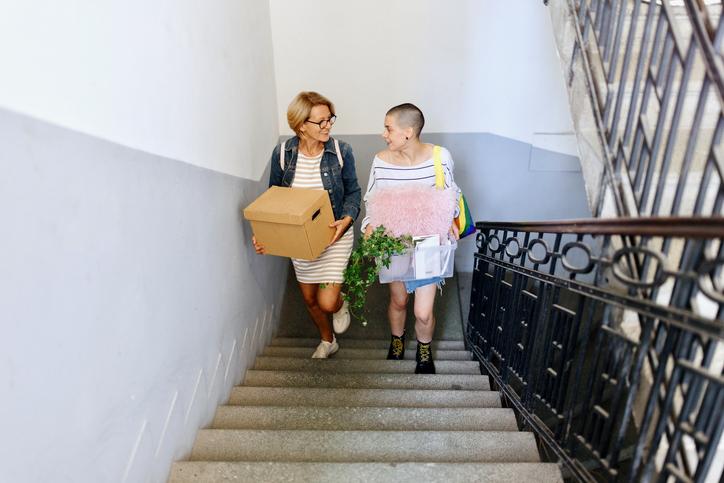
For many students, the transition to university is the biggest they have experienced so far. The extent of it varies between individuals but generally, as a minimum, students are entering a new type of educational experience at a large institution where they are treated as adults and responsible for their own learning and success. They might also be:
- moving away from parents for the first time, often to a new part of the country, or a new country entirely
- learning basic life skills, such as cooking and laundry
- feeling under pressure to form close ties with new people
- managing their own finances for the first time
- looking for and starting part-time work
- organising time to include leisure, study, work and personal care
- embracing new hobbies
- exploring their new surroundings
And so on…
University staff recognise this and offer information they think might be of use to students. In theory, this should help prepare them to navigate the experience.
Although this information is crucial, my view is that we should avoid offering it to students during the initial weeks of term as much as possible. Instead, we should provide information ahead of arrival and then as needed throughout their studies. There are several reasons for this.
It increases student buy-in
It’s results day. An applicant has just got into their top choice of university and will start in a few weeks. They are desperate to get cracking. At this point, students are often enthusiastic about engaging with their new institution and are very likely to complete relevant tasks. During a course, offering information at points where it is likely to be immediately relevant will help students see the value in university communications and encourage engagement.
It fosters a sense of belonging
Engaging with staff, other students and university activities can build belonging before students have even stepped foot on campus. We should make students feel welcome, ask for their opinions and introduce them to aspects of their degree early to signal that we see them as individuals rather than “cogs in a machine”.
- Spotlight guide: How to build belonging at your institution
- Common barriers to belonging and how to overcome them
- Extracurricular activities are powerful tools for building belonging
It improves student confidence
Starting university can prompt anxiety, especially in students from under-represented groups who might not know anyone who has been to university so cannot ask for advice on what to expect. By providing resources or activities ahead of time we can help them familiarise themselves with their course, colleagues or institution and alleviate some of these very reasonable concerns, allowing excitement to take over as the prevailing emotion.
Examples include:
- Staff introductions
- Lecture and seminar equipment lists
- Information about key subject-specific spaces
- Virtual social events
- A platform for anonymous questions.
If you’re stuck for ideas, ask your current students what would have helped them.
It reduces staff workloads
An intense welcome period immediately preceding teaching can put a lot of pressure on staff. Stretching the provision reduces the intensity and makes the welcome period more fun because staff can prioritise building engagement with students rather than focusing on the delivery of (sometimes quite dry) information.
It reduces pressure on students
A stretched transition means students can use induction to focus on the non-academic aspects of starting university, such as learning to navigate a new environment, making friends and developing life skills such as cooking and laundry.
How much information is enough?
For each piece of information you plan to give to students during induction, I recommend considering whether it could be given earlier or later.
We host information or activities that can be completed before induction on a pre-arrival platform hosted in our virtual learning environment. This helps students build familiarity and confidence with navigating module sites, and the platform is available for them to return to throughout their degree. Our data shows that students continue to use it into their third year.
A virtual lab tour is an example of pre-arrival information that we have moved to the platform. The tour allows students to familiarise themselves with a new environment at their own pace, and as many times as they like. Our aim is to empower students with this and other information such as dress codes, kit lists and conduct rules before they arrive on campus.
We also stretch the transition throughout the first year, by sending students brief weekly or fortnightly emails that signpost them to information about, for example: extenuating circumstances, assessment submission and the word count policy a week before the first assessment deadline. In the second semester, these might convey more general information such as about a year abroad or placement opportunities and reminders to meet with academic advisers. By keeping these emails brief and for signposting purposes, we avoid sending students a wall of text, much of which might not be relevant to them individually. The content of these emails is informed by our student help desk team, based on the most common questions it receives throughout the year.
We offer templates of our pre-arrival site to anybody interested in adopting this approach.
Becky Lewis is lecturer in evolutionary biology at the University of East Anglia.
If you would like advice and insight from academics and university staff delivered direct to your inbox each week, sign up for the Campus newsletter.



comment