

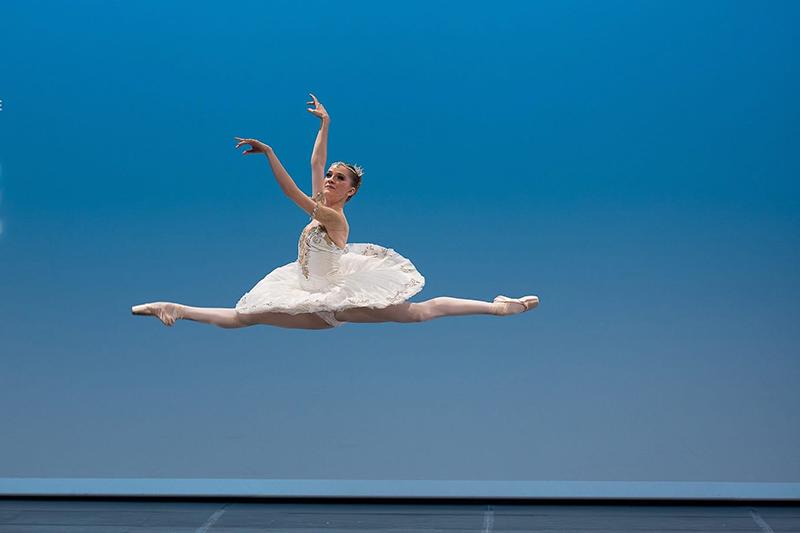
When I was nine years old, I stood on stage holding a nutcracker doll. At the time, I believed success meant discipline, sacrifice and constant striving. Like many young dancers, I learned early on that excellence is built on endurance. Later, dancing with international companies such as the Semperoper Dresden and the Stuttgart Ballet, I reached what many would consider the pinnacle of a ballet career.
Yet dancing professionally was so all-consuming that it left almost no room for a healthy work-life balance. I realised that despite achieving my childhood dream, I did not want dance to be my sole focus until retirement.
Leaving ballet forced me to rethink my relationship with performance. Completing my degree in physiotherapy sparked a desire for a deeper understanding of the human body, which led me to medical school. During this transition, I discovered dance medicine, a way of understanding the performing arts not as a system that pushes bodies to their limits but as one designed to protect them.
When people speak about excellence in ballet, they often speak the language of endurance: hard work, sacrifice and pushing through. Discipline will always matter. But in higher education, where institutions are responsible not only for performance outcomes but also for student well-being, endurance cannot be the whole model. In my work with ballet dancers, I repeatedly see the same pattern: problems rarely come from ambition itself. They come from environments in which technical demands are rising and support systems have not kept pace. Students are facing more complex technical requirements yet often they are still surrounded by generic conditioning, informal health advice and a culture that normalises silence when something feels wrong.
- Rethinking the process of patient and public involvement
- A guide to arts-based methods in medical research
- More than singing: a university choir as a cultural hub
That gap is where universities can make the biggest difference. This is where dance medicine can be most useful: not as a niche service for injured dancers but as a bridge between artistic training and evidence-informed healthcare.
Respect tradition, but review it
Ballet’s traditions give it identity, discipline and artistic depth. They should be respected. But tradition should not prevent training practices being reviewed. As technical expectations in ballet continue to rise, many training cultures still rely on older assumptions about pain, recovery and discipline. Ideas about warm-up, stretching, recovery or strengthening are passed down because they are familiar, not because they are always the best fit for today’s dancers.
This does not mean teachers have been doing things “wrong”. It means the context has changed. We know more about adaptation, fatigue and individual variability than previous generations did. Universities should create regular opportunities for studio teachers to engage with evidence-informed practice so that technical instruction and health protection are not treated as separate worlds.
Build multidisciplinary support before dancers reach crisis point
Dance students do not only benefit from healthcare when they are injured. They also benefit when support is built into the system early. For universities, this means defining how different professionals contribute. Teachers observe students daily and often notice changes first. Physiotherapists can help with movement-specific assessment, rehabilitation, prevention strategies and return-to-training planning. Strength and conditioning specialists can support performance capacity. Medical doctors are essential when symptoms need diagnosis or broader medical management. Dieticians and psychologists also matter, particularly in environments where body image pressure, perfectionism, stress or harmful eating behaviour can affect health and performance.
What matters most is not simply access but a referral pathway that students trust. If support only appears once someone is in significant pain or struggling to cope, the institution has intervened too late. A healthier culture treats asking for help as professional behaviour, not weakness.
Implementing tailored training approaches
Injury prevention rarely works as a one-size-fits-all protocol; it must respond to each dancer’s body, training history and context. In university settings, we should move away from uniform conditioning. Whenever possible, I use small-group and one-to-one sessions where dancers film their exercises to continue working on them independently between classes.
When teaching large groups – which is the reality for most educators – exercises need to be adaptable. Offering simpler variations for developing students and more challenging options for advanced dancers ensures that everyone can improve from their personal best. This principle is central to methods such as progressing ballet technique, where the same exercises can be scaled in difficulty, allowing each student to progress from their individual starting point.
This approach also supports teachers, enabling them to maintain a single class structure and musical framework without limiting more advanced students or leaving others behind.
Train teachers to change the culture
Universities often focus health interventions on students but the real multiplier sits with educators. Teachers shape what is normal in the studio: how pain is discussed and what success looks like. That is why continuing education for dance teachers may be one of the most important investments a university can make. A single well-supported educator can improve the daily experience of hundreds of students over time.
Excellence and well-being are not opposites; they are partners. Sustainability is not a weakness; it is professionalism. If higher education embraces a sustainable training model, we will not only nurture better performers but healthier humans and longer careers. And that, in the long run, may be the most meaningful performance of all.
Noémi Verbőczi is a former ballerina who became a physiotherapist and is now a second-year student in the Faculty of Medicine at Semmelweis University, Hungary. She specialises in dance medicine and assists with the continuing education of professionals as the European representative and master instructor of progressing ballet technique.
If you would like advice and insight from academics and university staff delivered direct to your inbox each week, sign up for the Campus newsletter.

comment