

The greatest barrier to how the arts contribute to the circular economy is the gap between awareness and practice. Creative higher education must therefore close the gap by deepening students’ sensory curiosity and connecting them with what is immediate, local and present. Students need to understand circularity by noticing how objects, clothing, products and materials reach them, and the complexities of moving resources around the world. They must ask not only what happens to an object after it is made, but why it is made, how and from what materials. This exposes the often-invisible forces shaping objects, which can be overlooked when practice focuses on expected visual or formal outcomes.
Creative higher education is increasingly building programmes aligned with sustainability frameworks, circular production, the United Nations’ Sustainable Development Goals and net-zero targets. These frameworks give arts specialist universities a shared language for climate action, but alignment alone will not move the dial on the cultural distance between awareness and the ability of the creative sector to contribute meaningfully to the circular transition.
- Combat sustainability burnout by giving students the tools to act
- Awareness to action: how to embed sustainability in university teaching
- Teaching ethics and sustainability through fiction
Pedagogical models in the UK still generally align with the linear learning adopted in 1999 via the Bologna Process, where learning a creative practice is also standardised through exams, hyper-specialisation and transactional outcomes. This “form follows function” line of thinking and making is degenerative regardless of alignment with sustainability goals. You cannot build the cultural behaviours necessary to make meaningful change from a system optimised for subject and social isolation. Higher education must seek ways to balance depth and complexity, expertise and the commons – an approach to teaching creative subjects that includes industry, knowledge of supply chains and local ecosystems as essential components of a model of study that mirrors the economic model of circularity.
Taking arts practices from linear to circular processes
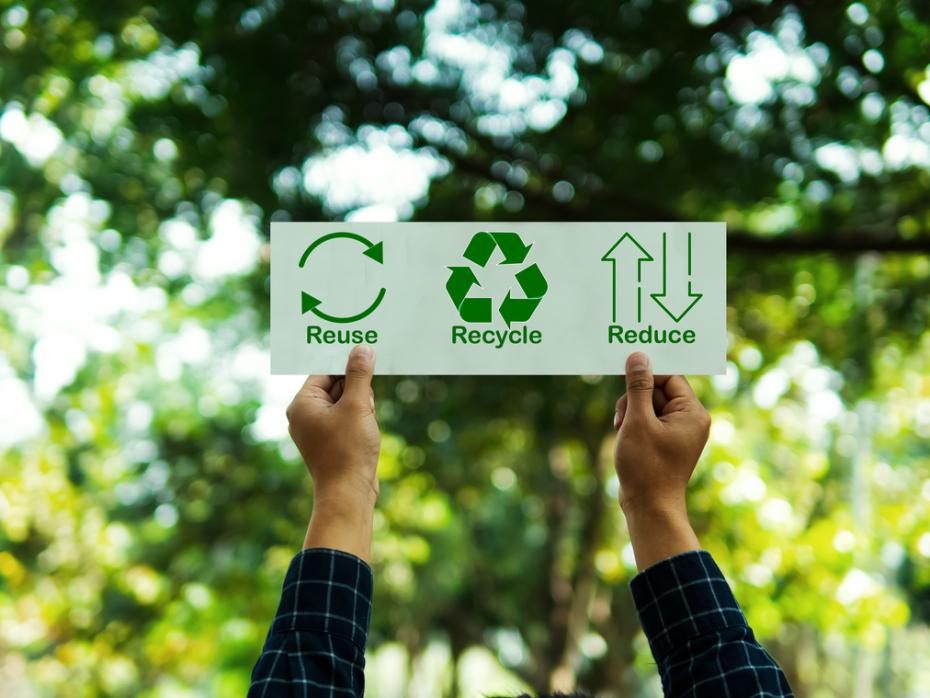
Reuse, recycling, repair and other methods of closing loops are vital as a direct, visible method for creative students to participate materially in the circular transition. These methods help students understand product life cycles, consumer behaviour and the importance of keeping objects and materials in circulation. Yet these approaches are usually deployed after production, at the end of an artefact’s life, linking circularity to behavioural change rather than creative exploration.
Creative practice is generative and begins earlier, through material exploration and experimentation, where innovation is often tacit and embodied. What we value in cultural artefacts is evidence of lived experience or an elegant solution to an implied problem. This evidence is realised in real time through an artist’s sensibilities, emerging as a unique authorial perspective.
At Arts University Plymouth, the question of where we enter the circular transition has led us to return to our material origins. Founded as a drawing school, with histories in technical and material-led practice including ceramics, glass, metals and wood, the university has introduced the Centre for Circular Materials (CCM) at the heart of research and teaching. The CCM unites Fab Lab South West with established material expertise and a biomaterials lab. It aims to anchor creative education in bioregional boundaries that emerge from encounters with local material ecologies (marine life, native plant and animal species, a coastal climate) as the primary step in understanding where circularity begins, or at least where artists and designers can enter the loop most meaningfully.
Begin with the material question
Circularity is a dynamic model of flow that is not recognised until the momentum is complete, where the gesture touches its starting point. Creatives need to build confidence in how to enter the circle, informed by how their material choices change the direction or success of that flow.
Students in our MA Design courses are asked to invent new products and services starting from local materials, resources and supply chains. The process of allowing the geography of the south-west UK to “lead” a design encourages a co-creative methodology partnered with nature. One student, who was experimenting with an algae species native to the Devon coastline, discovered a local plant that made a durable, bio-based textile whose beauty and circular viability came from the inherent qualities of the material.
Although the shift seems subtle, this co-authorship with natural and bioregional systems is a radical reconfiguration of the role of the designer or maker. Responsiveness to ecosystems is no longer merely symbolic or representational. Designs with the planet in mind are no longer merely “form follows function” but are those that extend material intelligence as co-author in the process of “form follows flow”.
Engagement with materials is an aesthetic decision that is consistent with the scope, dimension and beauty of the loop they enter or extend. This shifts circularity from a corrective act to a creative method, positioning material choice as a core part of authorship rather than as a technical detail or ethical afterthought.
Teach systems, not only objects
Circularity as a model of material production asks us to move beyond “take, make, waste” and question the structures of learning that reproduce that logic. A circular creative educational model considers the interdependence between objects and studio outcomes and the ecosystems from which they emerge. By addressing their work as material or immaterial symptoms of ecological, social, financial, cultural or economic systems, creative students can engage in material flows, supply chains and local ecologies, alongside the aesthetic, conceptual and technical development of their ideas.
If creative solutions to urgent planetary challenges are approached only as policy issues, carbon targets or post-production responsibilities, creative students’ engagement in the circular transition will remain limited. Creative higher education needs to offer deep subject knowledge, but the development of this knowledge for a circular economy must be realised through a responsive, cross-disciplinary and place-based curriculum much more porous with the living world.
Stephanie Owens is dean of arts, design and media, chair of the Centre for Circular Materials and convener of the Material Futures Research Group at Arts University Plymouth.
If you would like advice and insight from academics and university staff delivered direct to your inbox each week, sign up for the Campus newsletter.

comment