
At a time when students are experiencing greater loneliness and disconnection, we need to embrace a shared commitment to a culture that is relational rather than transactional. Whether interacting with students every day or supporting them behind the scenes, every university employee plays a role in student success.
At my university, we’ve built a highly relational culture centred on connection and care, through our engagement with non-profit organisation the Institute for Evidence-Based Change’s Caring Campus. The behaviours and techniques we’ve adopted through Caring Campus have improved not just the student experience, but retention, persistence and success rates.
How staff and faculty impact persistence and retention
New students often arrive on campus feeling uncertain and questioning whether they belong. Every interaction we have with them is an opportunity to reinforce that they are valued members of the campus community, and that encourages them to stay, engage and succeed.
Staff members are the backbone of our institution and often the first employees with whom a new student will interact. As such, it is vital that all staff members foster a caring and welcoming environment from day one. We do this in several ways.
- Strategies to promote belonging from the first day of term – and beyond
- Spotlight guide: How to build belonging at your institution
- Creating a culture of belonging with inclusive pedagogy
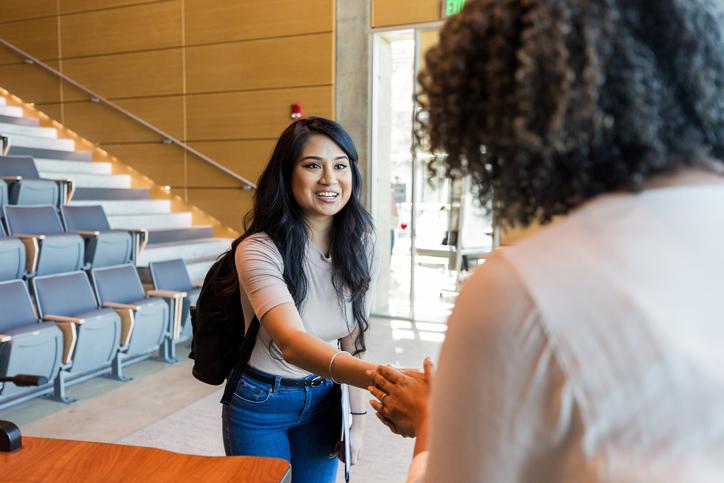
During Welcome Week, all staff on our campus work shifts at welcome stations where they greet students, offer water and treats, and answer questions. They also take part in the 10-foot rule, which encourages staff to approach anyone within a 10-foot radius and offer help. Wearing prominent name badges also increases approachability for students and other stakeholders.
Another strategy is increasing cross-departmental awareness by tasking staff with learning about the services available across departments and maintaining accurate, up-to-date directories. This ensures staff are fully equipped to direct a student to the resource or office they need. By engaging in the Caring Campus commitment to “warm hand-offs”, like physically walking a student to their destination rather than simply providing directions, we create more opportunities for connection and care.
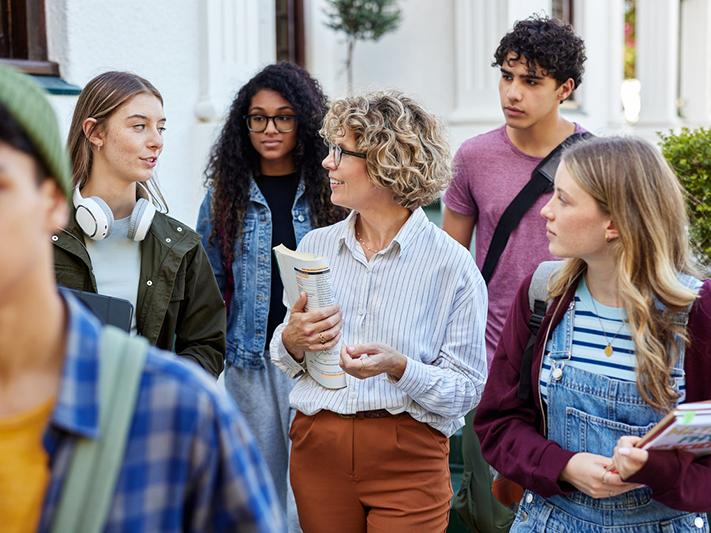
Faculty members play an equally important role in fostering students’ sense of connection and belonging. We encourage all faculty to learn students’ names early and use them often by offering reminders at the start of each semester. And by setting clear expectations and encouraging students to use office hours, faculty send the message that they care about every student’s success in their course.
We identified the faculty members that are excelling in these areas and asked them to build a framework and provide training to grow these skills across the faculty.
With staff and faculty aligned in fostering a caring culture, we lay important groundwork that directly supports student success.
Behaviours that work across higher education
I first introduced Caring Campus at San Antonio College, where I served as president from 2014 to 2022. It was instrumental in the college earning the Aspen Prize in 2021, and demonstrated that creating a caring culture leads to stronger student outcomes. Whether at a community college or a university, success begins by treating every student as a valued member of the campus community and believing in their potential.
I frequently tell my team that we need to be comfortable with being uncomfortable. When someone is too comfortable, they often become stagnant. As leaders on our campuses, we have to be good at being uncomfortable, because that is where continuous improvement lies. Performing these caring behaviours isn’t just about checking a box. It’s about embracing these actions every day.
Proven results
We first brought Caring Campus to Texas A&M University – Kingsville in spring 2024, and have since seen significant results in our student retention and persistence rates, underscoring that students want to stay at institutions where they feel a sense of belonging and care.
Our autumn-to-spring retention rates hit an all-time high in our last cohort at an astounding 92.6 per cent, where we were previously hovering at 78 per cent. Our year-on-year persistence rates have also seen tremendous gains, now at 76.3 per cent, compared with 62 per cent in 2022.
One of the most beautiful unintended results of doing this work is that our students themselves are now emulating the same behaviours they have seen us engage in. Visitors and community partners who come to our campus have praised our students, saying they asked for directions and a student walked them where they needed to go, modelling the warm hand-off themselves.
Culture wins every time
What I’ve learned in my years in higher education is that you can’t deploy and execute strategy without a strong culture. Creating a culture of care and belonging has helped improve student retention and persistence rates on our campus over the past two years, which will soon culminate in increased graduation rates.
By staff and faculty embracing their vital role in creating a welcoming, caring environment, we ensure that every student feels empowered to succeed and can proudly call our university their home away from home.
Robert Vela is president at Texas A&M University – Kingsville.
If you would like advice and insight from academics and university staff delivered directly to your inbox each week, sign up for the Campus newsletter.


comment