

For years, teaching has relied on simplified models and neatly packaged datasets to teach complex systems. But step into the real world, and those clean assumptions quickly fall apart. When I teach power systems operation and control, the students usually understand the theory, but struggle to connect it to real-world complexity – where loads can fluctuate unpredictably, renewable generation is intermittent and control systems don’t behave as neatly as equations suggest.
So, how do we prepare students for this reality? One answer we’ve found lies in living labs. The university campus itself becomes a working system, and learners learn not just by studying it, but by engaging with it in real time. Instead of relying purely on models or ideal datasets, they engage directly with a functioning system – one that is messy, dynamic and real.
Energy living lab infrastructure
At my university, the idea of a living lab goes beyond simply having advanced infrastructure on campus for demonstrations. It is also about turning that infrastructure into an active learning and innovation ecosystem. The Punggol campus has been deliberately designed as a real-world testbed, where multiple domains such as energy, transport, virtual systems and building services are integrated. This means students are not just learning concepts in isolation, they’re engaging with systems that reflect how industries actually operate and evolve.
- Shared effort for measurable impact: building sustainable labs through partnership
- A whole-university road map to sustainability impact
- A practical approach to tackling eco-anxiety
What makes this approach particularly powerful is the digital backbone that connects everything together. Through the Living Lab Network, data from diverse sources, ranging from microgrids and building management systems to Internet of Things sensors, is aggregated and made accessible via a cloud data portal called Heterogenous Info-store for Teaching and Skilling. This creates a seamless link between physical infrastructure and digital tools, enabling students, academic staff and industry collaborators to work with real-time data in a secure and flexible environment.
This integration of infrastructure and data is what allows our living lab to move beyond monitoring and demonstration into meaningful engagement. Students are not just observing systems, they are analysing them, modelling them and, increasingly, using them as the basis for innovation.
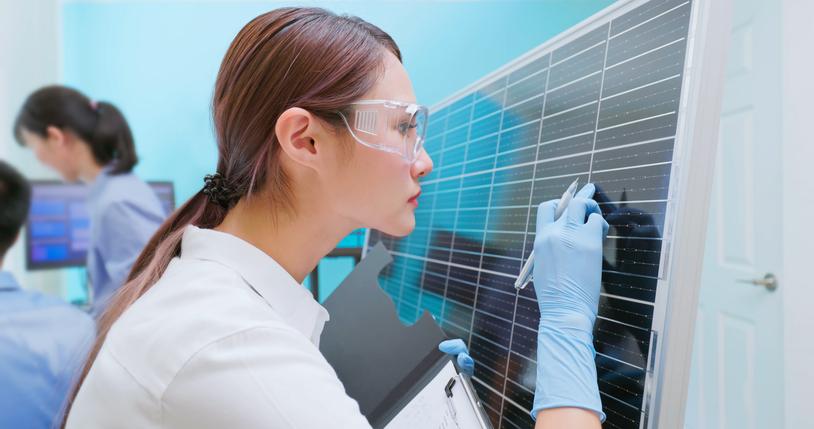
For students in the electrical engineering domain, the Energy Living Lab has a fully operational smart energy system that integrates solar photovoltaic systems, battery energy storage systems, building loads, EV chargers and energy management systems. This allows them to analyse and interact with a real-world power network rather than relying solely on simulations or theoretical models. More importantly, the Energy Living Lab allows learners to move beyond passive observation. They can now, in real time:
- analyse how solar output varies with weather and time of day,
- study how energy storage responds to peak demand, or
- understand how different parts of the microgrid interact.
This transforms learning from “what should happen” to “what is actually happening”.
One common mistake with living labs is treating them as optional or peripheral. The real value comes when they are embedded directly into teaching. Together with some colleagues in the electrical power engineering programme, we are taking small steps in integrating the Energy Living Lab to enhance teaching and learning across multiple modules such as:
Sustainable energy generation: Students design solar photovoltaic systems for the Punggol campus using industry tools like PVSyst or Helioscope. But instead of stopping there, they compare their designs against actual campus performance. They then extend their work into system-level analysis using a microgrid modelling software called HOMER, evaluating both technical and economic feasibility.
Smart grid design and analysis: Students work with real load and generation data to develop real-time pricing strategies and demand response schemes. They then evaluate how effective these approaches are in reducing overall energy consumption and peak demand.
What makes this approach effective
These learning activities, enabled by the Energy Living Lab, allow learners to validate their designs against real-world data, bridging the gap between simulation and actual system performance, while developing practical, industry-relevant skills. In doing so, it closes the theory-practice gap by exposing students to real operational constraints – weather variability, system inefficiencies and dynamic load behaviour. It also encourages systems thinking, as students move beyond isolated components to understand how generation, storage and demand interact within an integrated energy system.
However, living labs can offer more than this. We are now moving beyond just providing access to real-world data towards developing digital twins that enable deeper learning and experimentation. A digital twin is not just a static model, but a dynamic virtual replica of the physical system that is continuously informed by live data.
Using Energy Living Lab data, students can recreate the campus microgrid within simulation tools, validate their models against actual system behaviour and explore “what-if” scenarios in a safe, controlled environment. This allows them to investigate practical questions such as the impact of increased solar penetration, how battery sizing influences cost and reliability or whether demand response strategies can effectively reduce peak loads. As a result, these exercises move beyond theory and become grounded in the realities of an operating energy system.
Altogether, this prepares students more effectively for industry by equipping them with skills in data analysis, system modelling and optimisation that are directly aligned with real-world engineering practice.
If you are thinking of adopting a similar approach, a few practical considerations:
- Start with data accessibility: Infrastructure alone is not enough, learners need structured, usable data.
- Integrate into modules early: Don’t treat the living lab as an add-on. Build assignments around it.
- Use the right tools: Platforms like HOMER or PV simulation tools help bridge the gap between raw data and insight.
- Enable safe experimentation: Digital twins are key to scaling learning without operational risk.
Most importantly, focus on the learning outcomes, not the technology.
Sivaneasan Bala Krishnan is an associate professor at Singapore Institute of Technology.
If you would like advice and insight from academics and university staff delivered direct to your inbox each week, sign up for the Campus newsletter.

comment