



Responsible for medical, chemical, biological and structural breakthroughs, university labs are powerhouses of research and innovation. Yet the spaces where these discoveries take place are often behind the curve when it comes to sustainability. Labs consistently use the most energy and frequently produce the most waste of any space type on campuses. We estimate that labs comprise 12 per cent of the space at Georgia Institute of Technology and are responsible for 57 per cent of our energy use.
Changing this should not fall solely on the users of the space, however. Sustainability is a partnership of design, operations and behaviour. Nor should all elements be expected to operate on the same footing or time frames. Securing funding for new buildings or renovations that incorporate more sustainable designs may be a multi-year process. Lab managers and principal investigators, on the other hand, have power to make change today.
- Spotlight guide: Greener lab practices in higher education
- Campus Talks podcast: How can universities nudge students and staff towards greener choices?
- Tips to integrate sustainability into day-to-day university lab practice
The good news is that many sustainable changes are practical, cost-effective and easy to implement and need not compromise research quality or productivity. They also provide a foundation for institution- and sector-wide change. Below are actionable steps labs can adopt to reduce their footprint.
Small changes for more sustainable research labs
Incorporating sustainable practices in the lab does not require sweeping changes or major investments. Small, intentional adjustments, when applied consistently, can make a meaningful difference. By prioritising waste reduction, energy efficiency and resource conservation, research labs can shrink their environmental impact while continuing to advance scientific discovery.
Waste reduction and recycling
Researchers can adopt many ways to minimise waste and ensure proper disposal practices in their lab. They can:
- use reusable dishes for lab gatherings instead of single-use items
- implement tip washing, if possible, to reduce plastic waste
- use refillable tip options and recycle tip inserts whenever possible
- recycle batteries through appropriate recycling programmes
- ensure only biohazardous materials are placed in biohazard bins
- avoid unnecessary duplication of equipment and reagents across the lab
- use reagents on a first-in, first-out basis to prevent expiration and waste
- sort recyclable materials carefully to ensure proper recycling
- recycle Styrofoam containers through specialty recycling programmes
- choose suppliers that offer take-back programmes for packaging, such as foam coolers and ice packs.
Energy efficiency
Identify opportunities to reduce energy consumption without affecting lab performance. Researchers and lab managers can:
- prioritise energy-efficient options when buying new equipment
- determine which equipment can be turned off daily versus placed in standby mode
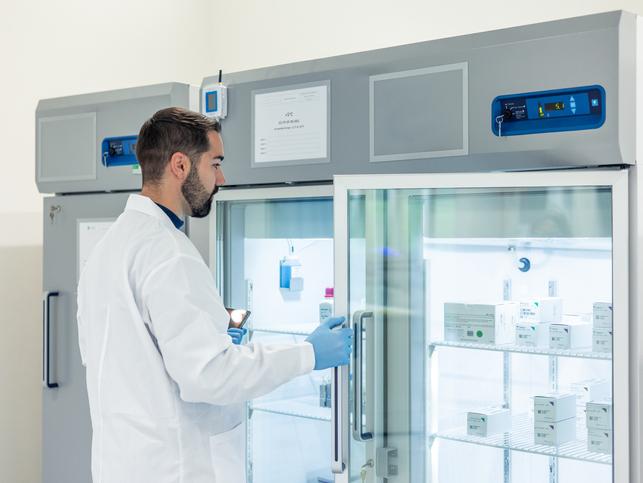
- perform annual freezer maintenance (such as defrosting, checking door seals and cleaning filters)
- increase the baseline temperature of -80°C freezers to -70°C, where appropriate.
Conserve water, paper and other resources
Reduce unnecessary resource use through simple operational changes, such as:
- regularly check for leaks and request maintenance as needed for water lines and equipment
- print only when necessary and rely on a shared printer
- recycle toner cartridges
- install motion sensors for lighting to reduce unnecessary energy use
- digitise lab records and store them electronically.
Partnering for system change
Offices of sustainability and other convener departments play a critical role in scaling sustainable lab practices from individual to institutional level. These administrative offices serve as steadfast partners that carry the work forward as undergraduate and graduate students, and often research faculty, rotate out of labs.
We have created a Georgia Tech-specific sustainable labs programme. It incorporates campaigns around known best practices, such as a Shut the Sash campaign to encourage closing fume hoods when not in use and participation in My Green Lab’s International Freezer Challenge. The challenge provides a checklist of actions labs can take to reduce energy use and waste in their freezers.
These campaigns introduce common lab sustainability concepts and begin to build community. Such efforts, along with workshops inviting the sharing of best practices and input from lab users, establish a circle of feedback with our sustainable lab community.
This feeds into the other role that administrative offices can play in supporting sustainable labs: advocating for infrastructure to support labs, advancing system change rather than solely encouraging best practices. Examples of this include institute contracts on frequently used hard-to-recycle materials (pallets, for example) and updates to vendor contracts requiring take-back of delivery materials such as ice packs.
In the end, advancing lab sustainability requires alignment between institutional leadership and everyday lab practices. Organisations set the tone by providing resources, policies and incentives that prioritise sustainability, while lab teams bring those priorities to life through practical, incremental changes in their daily work. When both perspectives work together, sustainability becomes not just an initiative but an integrated part of how labs operate and innovate.
Shweta Biliya is research scientist in the Molecular Evolution Core Lab in the Institute of Bioengineering and Bioscience, and Drew Cutright is director of sustainability engagement in the Office of Sustainability, both at Georgia Tech.
If you would like advice and insight from academics and university staff delivered direct to your inbox each week, sign up for the Campus newsletter.


comment