

Much of the conversation around social mobility focuses on access to higher education. But earning admission to college, important though it is, doesn’t automatically prepare students for the professional world.
Maybe instead we should be talking about social mobility through higher education and employer partnerships – where the university becomes an equaliser. Here, I refer specifically to social mobility achieved through the human skill of interacting with potential employers – that is, professional capital.
The challenge is that students enter university with wildly different levels of professional capital. Some arrive on campus already understanding professional workplace norms, what “business attire” means, how to navigate LinkedIn, techniques for networking, the importance of experiential learning and the confidence to introduce themselves in professional settings. Others start their course with the same talent and ambition but without those experiences. They may be first-generation college students or come from families where professional networking simply wasn’t part of everyday life. Approaching an employer at a careers fair can feel intimidating if they’ve never had the chance to practise.
That’s an opportunity gap that universities can – and should – help close.
Networking isn’t a personality trait. Interviewing isn’t an instinct. Professional relationship-building isn’t something students either “have” or “don’t have”. They are all honed skills – and skills require practice.
- Want industry speakers? Get them in early
- ‘Universities must manufacture the work experience AI is deleting’
- Five ways to make workplace learning count
Unfortunately, many of our traditional employer-engagement activities don’t provide that opportunity.
Students sit through presentations, collect company brochures and listen to recruiters describe internships and full-time positions. They leave with information but little experience interacting with the people who might eventually hire them.
That’s why I no longer encourage employers to host information sessions; those days are – or should be – over. PowerPoint presentations rarely prepare students for the moment that matters: introducing themselves to an employer, asking thoughtful questions, carrying on a conversation and making a lasting impression.
Create lower-stakes networking opportunities
Instead, in my work as a career adviser and industry relations manager for Virginia Tech mechanical engineering, I have shifted towards creating lower-stakes networking events, where students feel more comfortable making connections.
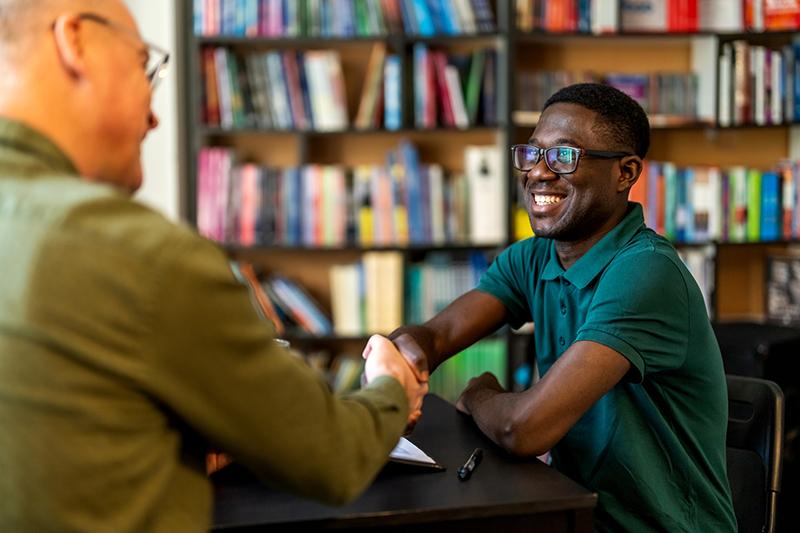
Rather than relying primarily on formal information sessions, we host coffee chats, lunch-and-learns, casual employer meet-and-greets and boutique networking events. Students talk to employers in smaller groups instead of waiting in long lines for a brief conversation at a career fair. Alumni and former interns share their experiences. Employers become people rather than intimidating recruiters standing behind a table.
The conversations are more relaxed. The questions are more authentic. And students begin building the skills they’ll need long after graduation.
Help students practise interview skills
We apply the same philosophy to interviewing. Before our largest engineering career fair, the Engineering Expo, we host a “gear up” event; students rotate through stations where they practise interviews and networking, they introduce themselves and they have their résumés reviewed. Employers and alums staff this practice event, all in mentoring and supportive critiquing mode.
By the time students arrive at the expo itself, they are building on previous practice. That matters because confidence doesn’t come from hearing advice; it comes from doing something repeatedly until it becomes familiar.
Human skills are learned through interaction
Today’s students have no shortage of information. They can find résumé templates online, use AI to generate interview questions and access countless career resources with a few keystrokes. What technology can’t replicate is the experience of joining a conversation, reading body language, asking a follow-up question or recovering gracefully when the conversation doesn’t go as planned.
Those are human skills. And they are developed only through human interaction.
I’ve watched hesitant students become comfortable talking to employers simply because they had practice, in welcoming environments, before entering a crowded career fair. I’ve seen recruiters remember students because they spent an hour talking over lunch instead of 30 seconds exchanging résumés or CVs across a table. Those relationships have led directly to internships and careers.
The encouraging part is that none of this requires an expensive new initiative. Universities can replace one presentation with one conversation. Invite employers to host small-group discussions instead of lectures. Bring alumni and former interns back to campus. Create mock networking sessions. Give students opportunities to practise interview skills before the real thing happens.
A university degree by itself doesn’t lead automatically to social mobility. It’s achieved when every student can develop the professional skills – and the professional relationships – that help open the next door.
Alyssa Rametta is career adviser and industry relations manager for mechanical engineering at Virginia Tech. She won Virginia Tech’s 2026 Award for Excellence in Career Advising and was an inducted member of the Montgomery County 40 under 40 in 2025.
If you would like advice and insight from academics and university staff delivered direct to your inbox each week, sign up for the Campus newsletter.



comment