

Collaborative online international learning (COIL) allows diverse perspectives to interact, and participants to negotiate meaning and co-construct knowledge in a virtual classroom. It not only aligns with universities’ internationalisation strategies but supports the development of global citizenship and employability skills essential for 21st-century graduates. Here’s how to make it work.
Find the right partner
A strong COIL project begins with the right collaboration. You can identify partners through institutional networks, COIL platforms such as UNICollaboration, COIL Connect and Erasmus+ Virtual Exchange, academic conferences or professional associations.
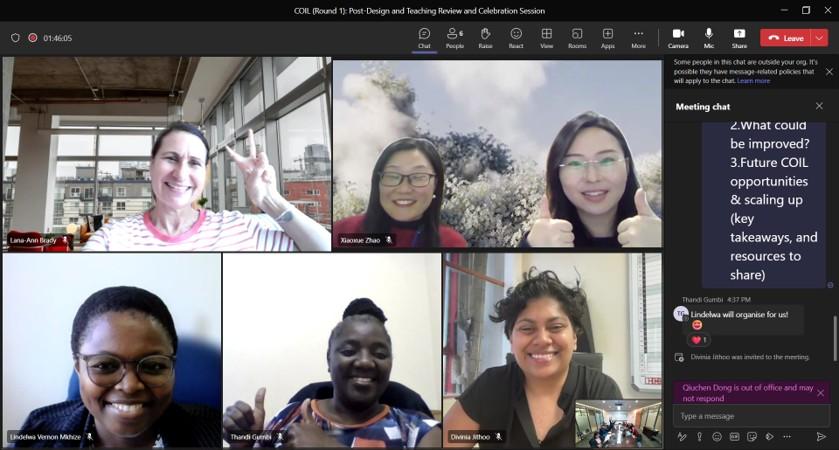
For instance, one collaboration evolved from a casual conversation about pedagogy between academics into a four-week COIL initiative connecting students at our China-based university and Durban University of Technology (DUT) in South Africa.
When selecting a partner, consider five core factors:
- Aligned learning objectives
- Student compatibility
- Scheduling overlaps
- Compatibility of digital platforms and technologies
- Institutional support.
Tips for designing effective COIL experiences
A well-structured COIL experience develops across four interlinked phases, each critical to fostering engagement and positive outcomes:
Pre-COIL preparation: faculty collaborate to co-design the curriculum, define learning objectives and establish deliverables. Early coordination on schedules, technological tools and assessment criteria is essential. Introductory cultural orientation sessions lay the foundation for respect and effective collaboration.
Collaboration and engagement: students from each institution co-create deliverables virtually. Common formats include multimedia presentations, case studies and research projects aligned with the Sustainable Development Goals (SDGs).
Example in action: a recent chemistry COIL project with DUT tasked students with analysing laboratory safety standards, which improved communication and teamwork skills.
Celebrating achievements: events, such as virtual exhibitions, allow students to present outcomes and reflect on learning. Certificates of completion reinforce motivation and recognise intercultural engagement as a formal learning achievement.
Reflection and assessment: structured reflection activities encourage students to articulate insights, recognise cultural assumptions and evaluate group dynamics. Faculty can collect feedback to improve future iterations.
Avoid common pitfalls
Even well-designed COIL projects can face hurdles. You can mitigate these through regular check-ins and shared progress tracking. Address unequal participation by assigning roles and integrating peer evaluations. Prevent technical issues by testing equipment in advance and being flexible with scheduling. Finally, minimise cultural misunderstandings through early dialogue on expectations. For example, conversations about communication expectations help teams surface cultural differences and prevent miscommunications, while rotating roles ensures balanced participation. When connectivity issues arise, teams can shift to mobile-friendly tools and voice notes to continue co-creating viable sustainability-focused solutions. Anticipating these challenges strengthens both collaboration and trust between partners.
- Beyond borders: how to make online global collaborative learning work
- Bringing international and intercultural dimensions into your programmes
- Tips for mastering the Global Shared Learning Classroom
Be selective with themes
Certain themes lend themselves naturally to COIL, including the SDGs, intercultural communication, entrepreneurship, business case studies, medical ethics, cross-cultural healthcare and STEM-based problem-solving. Grounding projects in real-world issues heightens student engagement and demonstrates how global perspectives enrich disciplinary learning.
Build a global learning ecosystem
For COIL to thrive beyond isolated initiatives, we must embed it into institutional systems by investing in people, partnerships and practice. This involves developing faculty. To do this, universities should provide structured professional development, including workshops, mentorship and communities of practice that equip educators with digital pedagogical skills and intercultural awareness.
Institutional integration: embedding COIL into strategic plans, curriculum frameworks and policy documents legitimises it as a core pedagogy rather than an add-on. Recognising COIL in promotion, workload and teaching excellence frameworks encourages participation.
Strategic partnerships and research: when universities align COIL with broader internationalisation strategies, they create recurring partnerships that amplify global learning impact. Sustain long-term collaboration through memoranda of understanding, joint research and student exchange pipelines.
To implement COIL successfully, start small, find passionate partners, structure collaboration carefully and build reflection and iteration into every phase. With the right design and institutional support, COIL doesn’t just connect classrooms, it transforms them into vibrant global communities. These globally networked environments equip students with intercultural competence, empathy and adaptability – skills indispensable for navigating an increasingly interconnected world.
Anisa Vahed is associate professor of practice at the Educational Development Unit, Academy of Future Education, Xi’an Jiaotong-Liverpool University.
If you would like advice and insight from academics and university staff delivered direct to your inbox each week, sign up for the Campus newsletter.

comment