
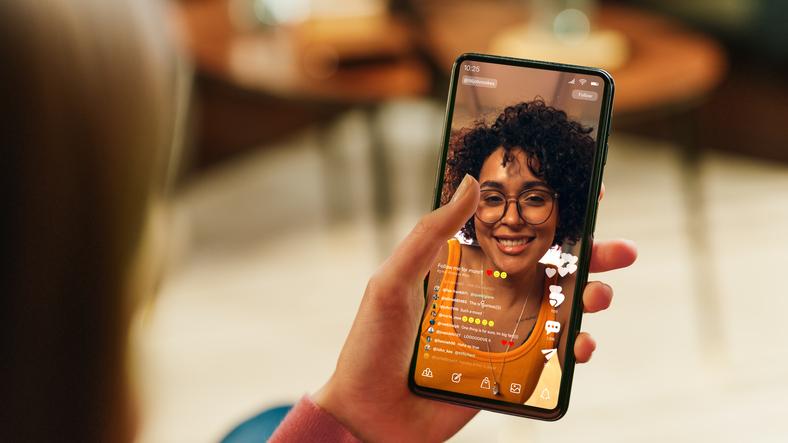
Ask a classroom of students what they wrote in a course assessment and they might shrug. Ask them what they posted, commented on or reacted to on social media, and suddenly the room comes alive. How can we channel this enthusiasm into their learning?
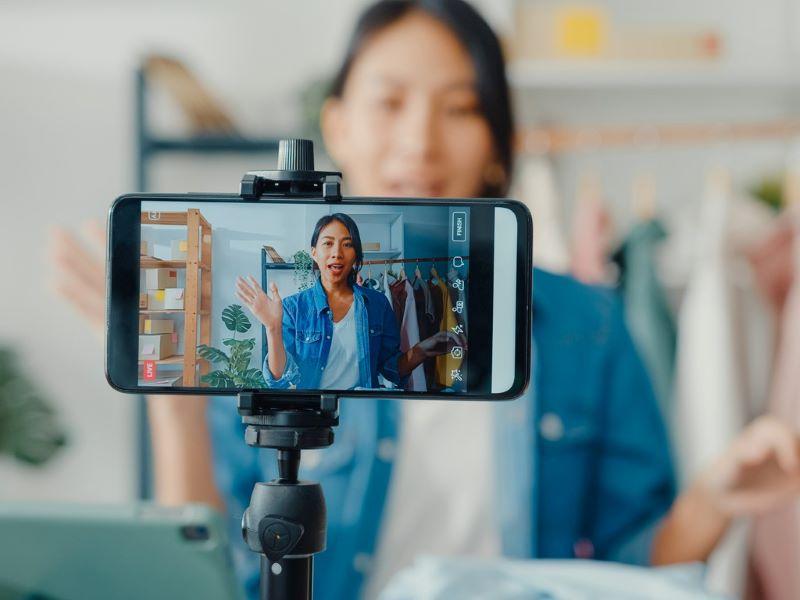
At our school, the Li Ka Shing School of Professional and Continuing Education, we worked to bridge this divide by bringing social media content creators, often referred to as key opinion leaders in our region, into the English language classroom as workshop co-facilitators.
What was the impact?
The rationale behind these workshops was to address a fundamental pedagogical question: how can we assess not just grammatical correctness but the ability to communicate effectively, critically and creatively in the digital world?
- Campus Talks: Using social media not as a tool but as a teacher in higher education
- Spotlight guide: What can higher education learn from social media?
- Harness the powers of social media for learning
Our proposed solution was a multi-stage task built around social media content creation and critique as part of our English course assessment. In a workshop titled “Crafting and critiquing social media posts”, more than 200 access diploma students analysed posts from local influencers specialising in personal branding and marketing. Students deconstructed the mechanics of effective real-world communication, before working in groups to create their own promotional text with a clear call-to-action, informed by their own trend observations.
The innovative addition to the workshop was bringing in local content creators as hands-on facilitators, rather than guest speakers. These practitioners of digital communication served as what we came to call “reality bridges”, connecting the mechanics of language learning with the excitement of real-world impact.
During content creation, the content creators provided immediate, informal feedback such as: “Would this appeal to the target audience?” By enabling students to learn directly from experienced practitioners, the task focus shifted from writing with perfect grammar to writing for real communicative impact.
How authentic tasks forge rhetorical awareness and identity shift
As students were allowed to huddle around tablets and smartphones and negotiate wording with their peers, the classroom was transformed into a collaborative studio. This social-constructivist approach, amplified by multimodal learning, turned tablets and smartphones into shared spaces for collective knowledge-building.
The true impact, however, emerged through authentic assessment. When tasked with creating social media posts for local content creators, students demonstrated heightened rhetorical awareness, deliberately employing persuasive hyperbole such as “must-see” and “you don’t want to miss it” in their calls to action. Their engagement extended beyond typical classroom learning when they eagerly shared their work on Padlet and provided meaningful feedback to peers.
Most profoundly, the presence of real-world content creators helped students undergo an identity shift and realise they were no longer simply language learners in a classroom but actual communicators in a connected world. For sub-degree students whose educational paths are still taking shape, experiencing themselves as authentic content creators might be the most valuable outcome of all.
Practical steps towards authentic assessment
Based on our pilot, here are practical suggestions for educators seeking to make English assessments more authentic.
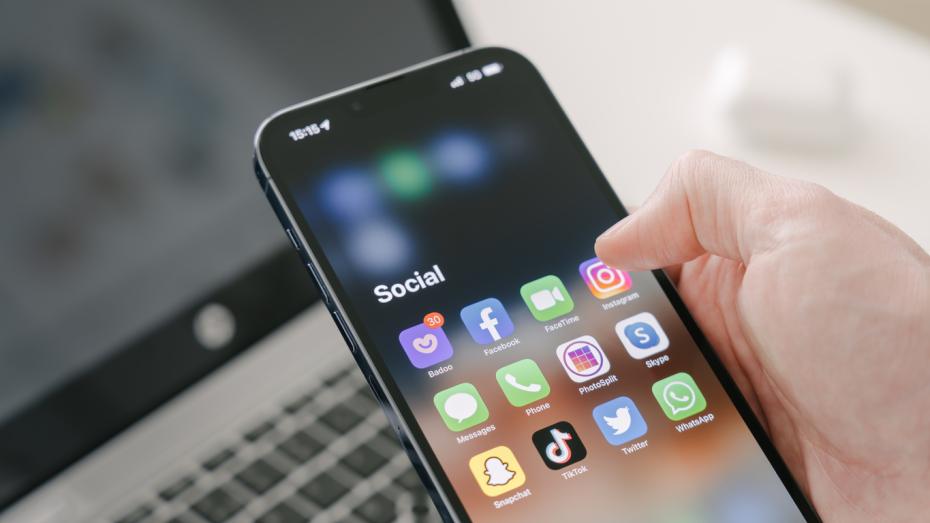
- Start by mapping the digital landscapes in which your students already live. For Hong Kong students, this meant Instagram and Threads. The goal is not to import artificial real-world scenarios but to tap in to existing digital platforms. When students create content for spaces they already occupy, motivation follows naturally.
- Redesign an existing assessment for authentic digital context and audience. Select a single formative task, perhaps a piece of persuasive essay writing or an individual presentation, and reimagine it for a real-world digital platform. In our case, we transformed a standard promotional text into an Instagram post. The core skill of writing a persuasive argument remained the same but the format, audience and purpose shifted. Students wrote for their peers, not just the instructor. This simple change made the task accountable to real communication standards.
- Integrate industry practitioners as facilitators. Identify influencers or other professionals who already succeed in an area the students relate to, for instance, lifestyle, travel or food blogging. Invite them as ongoing facilitators integrated throughout the learning process, not as one-off guest speakers. Ask them to provide informal feedback during task development. This is where contextual learning becomes transformative.
- Normalise Bring Your Own Device (BYOD). Turn technology into a tool for construction rather than a distraction. Let students use the devices they already carry and turn the classroom into a shared workspace.
- Assess the process and reflection, not just the final product. Consider asking students to submit a brief written or video reflection alongside their final piece, explaining their rhetorical choices and what they learned from the real-world context and feedback. This metacognitive step helps turn the whole experience into transferable skills that students can apply to their future academic or professional lives.
‘Likes’ versus learning outcomes
Indeed, integrating reality bridges into formal higher education is not without friction. One notable challenge during our pilot was reconciling the content creators’ industry-driven feedback, which prioritises immediate engagement and “virality”, with our structured academic grading rubrics.
As students manufactured FOMO (fear of missing out) into their calls to action, the English teaching team needed to intervene when they relied on overly sensational or grammatically loose hooks such as “last chance!” and “half the class have already tried this”. By co-teaching these workshops, course instructors were able to remind students that while hyperbolic language has its place in digital marketing, it must be used moderately.
The above highlighted the need to carefully review and moderate the workshops to ensure that core learning outcomes, such as critical argumentation and foundational language accuracy, are not entirely overshadowed by the pursuit of “likes”.
Extending to other disciplines
Moving forward, the implications of this model extend far beyond English language teaching. Disciplines such as business marketing, science communication and even public health could adapt this framework to train students in translating complex academic concepts for the general public.
By formalising these localised partnerships into a structured practitioner-in-residence model, we can narrow the gap between traditional course syllabi and the realities of the digital world. This way, assessment evolves alongside the students taking it.
Melissa Y. L. Yeung is senior lecturer in English; Ryan S. W. Lo is senior lecturer and programme leader of the post-secondary foundation programme; Hansel H. Y. Chan is lecturer in English and Derek C. T. Au is academic support officer, all at the Hong Kong Metropolitan University La Ka Shing School of Professional Continuing Education.
If you would like advice and insight from academics and university staff delivered direct to your inbox each week, sign up for the Campus newsletter.
comment