


School outreach is now an expectation within universities, particularly in areas such as climate change education, where researchers are increasingly asked to work with primary schools. Leading an outreach session with primary-aged pupils requires practical skills around grouping, managing their attention and pacing that goes beyond subject knowledge.
Based on a workshop about food waste and composting, this article reflects on approaches to grouping, sustaining attention and collaborating with school staff in unfamiliar spaces, using Lego Serious Play (LSP) as a tool.
Practicalities of working in school outreach projects
Effective outreach with children depends as much on preparation and ethical planning as on what happens in the room. As university researchers, you are entering an established learning community, and trust cannot be assumed on arrival. In our case, preparation for the workshop, which was supported by the university’s Sustainability and Resilience Institute, involved meeting with the executive headteacher and staff ahead of time to agree expectations, plan logistics and discuss pupil needs. We also spent time in the school environment, including attending an assembly, so we were recognised as familiar faces rather than unfamiliar visitors.
- How to bring university science into primary schools
- School Tasking: forget explosions, it’s all about the skills
- School visits are a triple-win for academics, schools and society
Given how busy school staff are, time for distributing, following up and collecting forms should be factored into planning outreach activities. For example, university ethics procedures required parental consent, meaning participant information sheets and consent forms needed to be completed and returned. When trust-building and ethical processes are treated as integral to outreach design, participation is more equitable, expectations are clearer and rushed introductions or avoidable exclusions are less likely to shape sessions.
Building bridges to understanding
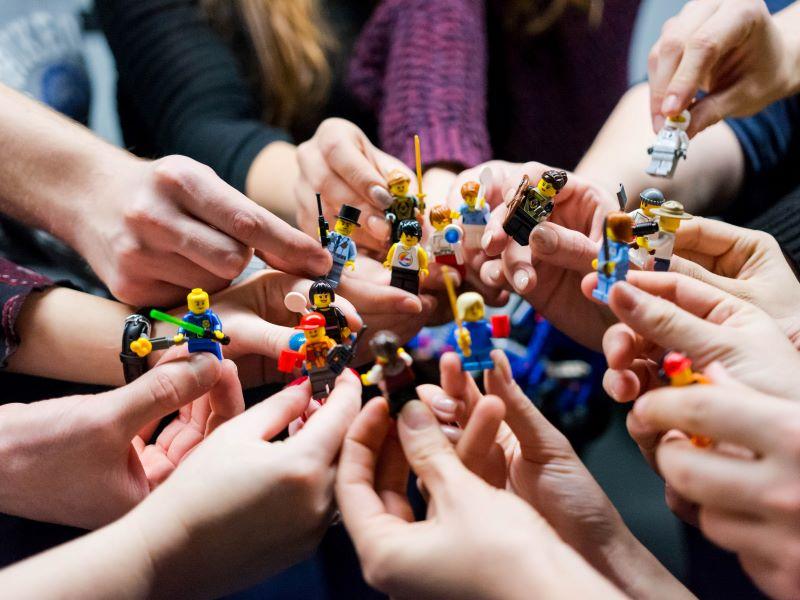
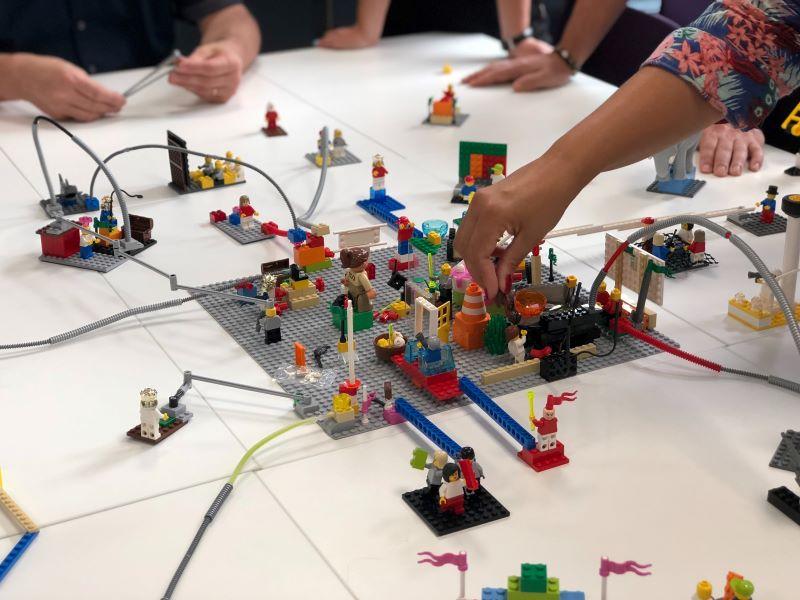
In this workshop, with 85 children in Year 4, we combined LSP with the Follow the Thing approach, which highlights connections between diverse communities and environments involved in a product’s life cycle. The children worked in groups on tasks that included building a bridge and modelling a banana’s farm-to-bin journey.
On the day, we reintroduced ourselves and explained the structure of the session, repeating this at the start of each activity so pupils could ask questions and understand what was coming next. This helped them stay focused and feel confident about what would happen. Children show understanding through talk, movement, building or hesitation, so researchers need to closely observe behaviour to monitor how the session is progressing. They also need to be willing to adjust plans as the group responds.
Grouping children can be a fun and playful activity in its own right. We handed out numbered Lego banana-themed cards linked to the activity and used the numbers to guide pupils to tables with simple instructions. When expectations are agreed in advance, staff can give researchers space to lead while staying close enough to support when needed. Make use of teachers’ knowledge of the class; they can also reassure pupils and help with transitions.
Outreach with children is most effective when facilitation remains responsive to how pupils engage. Researchers and facilitators need to be flexible to continually adjust to children’s questions, decisions and ways of working, paying attention not only to what is said but also to how pupils communicate through building, silence and peer support. As one researcher reflected: “You have to stay in the moment. You are learning as much about the group as they are about the topic.”
The key lesson is that when activities offer multiple ways to contribute, participation widens without turning the session into a lecture. Behavioural challenges were rare, but when they did arise, they were often linked to unclear instructions or group dynamics. Ways to resolve issues such as drifting attention include revisiting the task together, changing group composition or breaking activities into short, timed steps that maintain momentum without pressure.
Teachers noted that quieter pupils contributed more than in standard lessons because the tasks allowed children to communicate through models, with time to think before speaking and prompts that did not put anyone on the spot. Several staff also said pupils kept talking about composting afterwards. As one teaching assistant observed: “Each group brings something unique. You have to listen carefully to them and to yourself.”
Follow-up after the outreach session will help maintain the relationship beyond a single visit. We thanked school staff for their support and shared materials used during the workshop.
Letting young learners take the lead
Outreach with children requires more than subject expertise or enthusiasm for public engagement. It involves skills in forming groups without attaching assumptions, supporting attention without constant correction, working within unfamiliar spaces, and collaborating closely with teachers, while remaining responsive to children’s ideas and energy. Done well, engagement with children is not about impressing or instructing, but about noticing, adjusting and creating space for young learners to take the lead.
Nadera Assim is a podiatrist and doctoral researcher in health sciences at the University of Southampton. Her research is supported through the University of Southampton’s Black Futures Scholarship Scheme.
If you would like advice and insight from academics and university staff delivered direct to your inbox each week, sign up for the Campus newsletter.

comment