


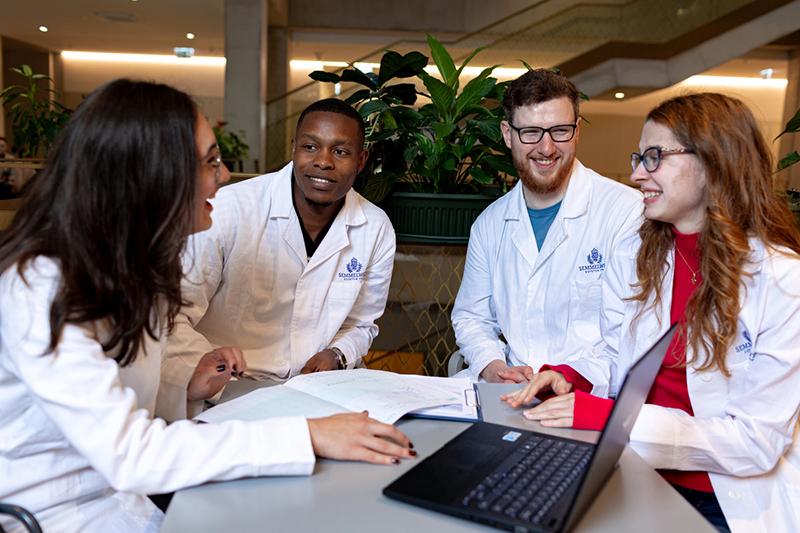
For students moving to a foreign city, the biggest hurdle isn’t buying dishes for a new apartment or figuring out the metro system. It is learning how to make a strange place feel like home, finding friends who could become a second family, learning the unspoken rules of a new academic environment, and finding a safe space to belong.
A peer-mentoring programme, where upper-year students provide guidance to first-year students, is one way to address these challenges. Students involved in these types of programmes – whether as mentors or mentees – experience positive outcomes, studies show, such as reduced anxiety, improved social and communication skills, increased self-esteem, self-confidence and self-awareness, more effective problem-solving and learning strategies, enhanced resilience and overall improvement in well-being.
- Study abroad coordinators need more support
- Tips to help international students feel at home from day one
- Spotlight guide: A warm welcome for new students
Mentors are not only a source of information and support for the first-year students, but more senior students also serve as role models, encouraging help-seeking behaviour and offering a safe, non-judgemental space that gives students confidence and self-awareness. The mentors themselves develop both personally and professionally, which reinforces the value of mentoring. The Institute of Behavioural Sciences at Semmelweis University, together with the Budapest Medical Students’ Association, started their scheme in 2019; it was extended to international medical students in 2023. The international programme was designed to ease culture shock, strengthen social connections and support students throughout their journey.
How to establish a peer-mentoring programme that works
When applying, mentors share their motivation and strengths, and mentees describe their preferences and background. While we often match students based on shared nationality, we also consider cultural background, hobbies, language preferences and interests to create the suitable match and build valuable connections. Mentors and mentees may request matches based on nationality, gender, hobbies or involvement in research or associations. The board works to honour these preferences while ensuring effective pairings.
The international mentoring programme is coordinated by the board and the staff of the Institute of Behavioural Sciences, including psychiatrists. Upper-year students apply with a CV and motivation letter, then selected candidates are interviewed. Accepted mentors enrol in an elective course led by university teachers. The number of participants each year depends on how many students apply to the programme and enrol at the university in that academic year.
This course develops the mentors’ helping skills and provides professional supervision through oral and written reports. Training covers essential competencies such as boundaries, basics of psychological support, and the recognition of alarming symptoms of a potential mental health crisis. The number of admitted mentors depends on the capacity to ensure high-quality training and supervision for each participant, which also defines how many mentees can be matched to the programme.
How to build a pool of near-peer mentors
Mentor selection can be based on interpersonal skills such as willingness to help, empathy, communication skills and sense of responsibility. For our programme, candidates are evaluated from a written application and interview. Potential near-peer mentors submit a written application and a motivation letter and undergo an interview and evaluation by the programme’s board. For quality control, mentors register for an elective course that develops their helping skills and assures supervision for their mentoring work through oral and written reports. Teachers with experience in mental health care and communication train the mentors to offer practical help and emotional support, and we emphasise accountability through regular check-ins, feedback and mentor resources.
Benefits of peer mentoring
With the system up and running, mentoring has been found to be a game-changer in four areas:
1. Adapt to a new environment
International students often feel the challenges of onboarding more acutely than local students and may need support with things that aren’t covered by official emails or checklists. How do you register for a subject when the interface is in a language you don’t speak? They might struggle to interpret vague feedback from a professor when they come from a totally different education system. It’s these small yet crucial things that can make or break a student’s ability to thrive, and these are the specific areas where trained senior student mentors can offer support to incoming international first-year students.
2. Cope with challenges and navigate studies
Mentors help students balance their lives. When professors urge them to study, and friends urge them to party, mentors help them find the middle path. Mentors also help students prioritise and see the bigger picture: which exams to prepare for early, and how to pace themselves for the long haul of a medical degree. Some of the most impactful moments we’ve seen come from the smallest gestures: a mentor encouraging their mentee to study at the library rather than alone at home, to take a walk after a hard exam or to join a student club they’d never have considered.
3. Reduce stress and provide emotional safety
At its core, mentoring is about creating safety, emotionally and socially. A smile from a mentor in a corridor, a check-in message at the end of the week – these things build confidence and resilience. We see mentoring not just as an educational tool but as a kind of preventive mental health intervention and promotion of well-being. When students feel supported and seen, they are more successful, not only in exams but in building a life they’re proud of.
4. Referral to other support services
In cases where the mentors recognise that their support is not enough to handle their mentee’s stress, anxiety, homesickness or academic pressure, they can recommend a university counselling service for professional mental health support. In cases of alarming symptoms, they immediately contact their supervisors.
Recognising when a mentee may require professional help is an integral part of the mentor training. Mentors are trained to spot signs of distress and potential mental health crises, and they receive regular supervision to reflect and gain guidance. These measures ensure they are prepared to support peers and refer them for professional help when needed
The power of peer support
Mentoring reminds us that supporting student well-being is just as vital as educational success. Our aim is to provide students with practical tools to manage their mental health, navigate the workload, and stay grounded throughout their studies. By helping each other, students grow into better listeners, leaders and future doctors. Through the programme, mentors gain lifelong skills in guidance and communication, while mentees find their footing and develop academic and social resilience.
Eden Friedman is a former international student who was a board member and a key contributor to setting up the international mentoring programme at Semmelweis University, Budapest. Adrienne Stauder is a psychiatrist, psychotherapist, associate professor in the Institute of Behavioural Sciences and senior supervisor of the international peer mentoring programme and works in the Student Psychological Counselling Service at Semmelweis University.
If you would like advice and insight from academics and university staff delivered direct to your inbox each week, sign up for the Campus newsletter.



comment