

US Gen Z graduates with experiential learning experience earn 34 per cent more than those without it, National Association of Colleges and Employers (NACE) research has revealed.
Students who apply learning to real-world settings don’t just earn more; they become future advocates and potential institutional partners.
But demand for company-led projects far exceeds supply, according to a recent Wiley higher education report. This gap presents a huge opportunity for institutions, students and the community at large.
Whether you’re thinking about incorporating company-led projects into an existing or new course, here’s how to get started:
Step 1: Define your client criteria
This step sets the foundation for the rest of the process. Think about what kind of clients you would like your students to work with and why.
We wanted collaborators who valued empathy and mentorship, had easy access to information (for example, without the need for non-disclosure agreements) and whose needs directly aligned with the course deliverables and timeline.
We also wanted to leverage existing relationships and work with clients who may become our students’ potential employers.
Here are questions to reflect on:
- What are some of the course constraints (for example, deliverables, timelines)?
- What values should we consider when selecting clients?
- What does an ideal client “look like”? (create a checklist).
Step 2: Focus on high-opportunity sectors
Think about the sectors that may present the biggest opportunities for future student employment and lowest barriers for partnerships.
Our course vision was to have students work on relevant projects with a purpose in mind. Building on this vision and the above criteria, we focused on the social impact space, which offers more entry-level opportunities for our students, who are mostly international.
We’ve also worked with internal university units, and it was a great way to leverage existing relationships in a sandbox environment.
Depending on your course topic(s), you may also work with industry associations, start-ups and small businesses in a relevant subsector.
Step 3: Design an efficient collaboration model
A lack of time is the number one barrier to meaningful engagement with higher education institutions, according to a recent UK study. Therefore, a structured collaboration model is essential.
Our terms are compact at 12 weeks, and so we developed the following model around the project milestones. Outside of the kick-off meeting and presentations, which the client is encouraged to attend, communication happens as needed asynchronously through the instructor.
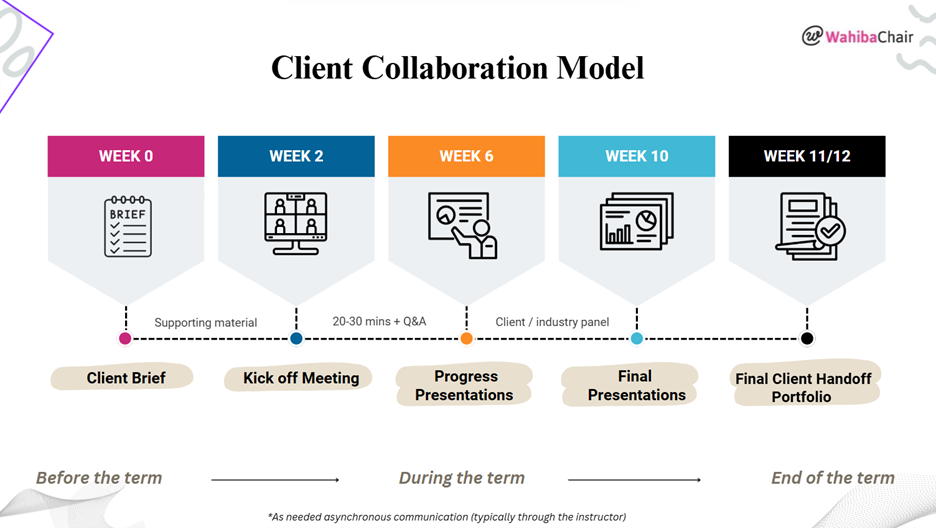
Ultimately, clients only spend up to three hours over the course of a term with our students. This low time investment has helped us reduce barriers when onboarding new clients. We also try to match more than one project per client, to maximise the benefits (ie, they receive multiple deliverable versions with roughly the same time investment).
- Spotlight guide: Get your students workplace-ready
- Spotlight guide: Course design for a new age
- Tried and tested ways to teach your students soft skills
Step 4: Generate and convert client leads
Finding the right partners is a key pain point for company-led projects. While certain platforms can facilitate industry partnerships, it can be risky at the beginning. So, I developed a curated and personalised client lead generation process, which you can build on:
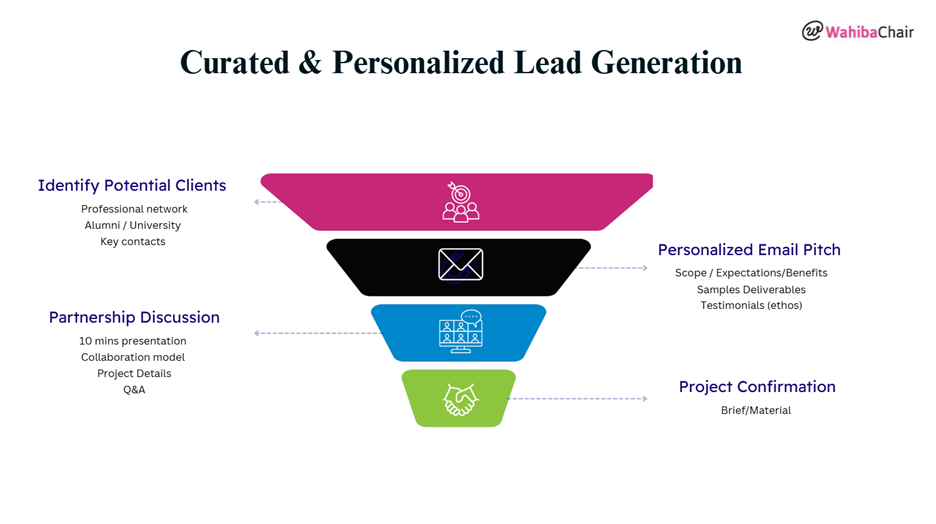
- Create a pipeline of potential clients using sector focus and criteria (by leveraging your and the university’s relationships)
Send brief, initial pitch emails with course description and collaboration model (include sample deliverables and testimonials as they become available)
Schedule partnership meetings for interested clients to ask questions and share project ideas
- Confirm projects by having clients submit project briefs (using a template like this) by a pre-term deadline.
In the past year, I sourced my own clients, but I’m now working with our career development centre for support. I encourage you to do the same.
Step 5: Gather feedback, document and refine
Company-led projects take time to develop, especially if you’re building a new course, so document successes (for example, sample high-quality deliverables and testimonials) and gather feedback from students and clients to continuously refine your collaboration model.
And, of course, always aim to build long-term non-transactional relationships to leave the door open for future projects. This will allow you to scale your efforts.
The payoff
Experiential learning is a spectrum, but real company-led projects are what students ultimately value. While setting up these projects requires significant upfront investment, the long-term benefits are substantial.
If you’re thinking about incorporating client collaboration into your course, let me know your thoughts or questions in the comments!
Wahiba Chair is an assistant professor at University Canada West.
If you would like advice and insight from academics and university staff delivered direct to your inbox each week, sign up for the Campus newsletter.



comment