

In the past few years, many faculty at universities have reported a decline in students’ willingness to read books – or even just substantial extracts such as several chapters from a text. While this is a particular problem in the humanities and the social sciences, where extensive reading is essential, it is common across the university.
That reflects a decline in reading across society generally. Social media and smartphone use have directed people’s time and energy towards visual images, video clips and brief, frequently reactive, writing – in the form of a few sentences on X and similar platforms.
Students have always been at liberty to determine how much and how little they read. But it is now difficult to assign even modest reading of 20 to 60 pages over a week with a reasonable expectation that most students will complete it.
The increasingly common resistance to reading – and to the concentration, effort, time, quiet and dedication that it demands – is underappreciated as a challenge in higher education. It continues to grow in intensity as social media and technology monopolise our attention – and usually in ways that are not conducive to focused, sustained reading of long-form writing.
- How I train students in strategic and reflective academic reading
- Six ways to design a class students look forward to
- If you want students to read more, consider asking them to read less
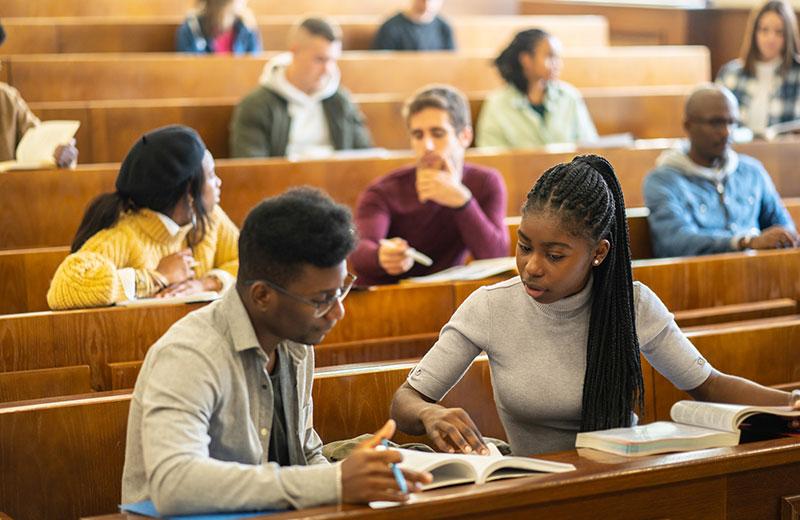
In my teaching, I have found that in-class reading helps students by giving them dedicated time and space for focused attention. It allows students to immerse themselves in ideas and knowledge without distraction. Laptops and phones are turned off and put away, and only books or physical paper copies of articles are used for reading.
Although reading takes place on an individual level, with everyone poring over the same texts at the same time, this is a shared learning activity – individual but together. It culminates in a discussion of texts when their core arguments are fresh and students are most engaged with them.
Reading regularly in class, students become better able to focus and develop their analytical and synthetic capacities. Frequently they underline, circle, highlight and write notes on the reading material, which makes them more likely to remember the text and to absorb meaning from it.
In-class reading ensures that there is a shared, collective basis for informed seminar discussion because everyone has done most of the reading. It is a small percentage of the overall course reading I assign – and it cannot and should not replace reading at home – but it’s one pedagogical anchor that has proved its value even though, or perhaps because, it is simple and low tech.
More discerning and critical readers
The exercise cultivates in students fluency in and comfort with reading, making reading an organic, weekly practice.
Through the weekly practice of reading, students grow more familiar with reputable sources of knowledge and more able to discern their positions and points of view. As we read critically, students begin to distinguish the difference in political orientation and perspective of an opinion article in The New York Times and The Guardian from one in The Wall Street Journal, The Daily Telegraph or Financial Times.
By drawing on a diversity of academic and journalistic sources, students become not just better readers and learners, but also more informed and conscientious consumers of media. Rather than relying primarily on X, Instagram, TikTok or Facebook for their news, students acquire discernment and a critical sensibility that empowers them to read independently beyond the course syllabus.
Quality over quantity
In-class reading can pose challenges for some students. I strive to address these to ensure that everyone can use the time effectively and without stress.
It’s important to be sensitive to the needs of students with disabilities, as well as to those who read more slowly. I emphasise that it’s fine not to finish reading an article, and I ask each student to read at the pace that is comfortable for them.
While most students do finish the reading before we start discussion, some get through only 70 or 80 per cent of an article. I reassure the class that this is sufficient to provide us with a strong basis for discussion. Any unfinished reading can be completed at home, I point out. What matters is not reading an article in full in class but rather ensuring a sustained engagement with the material that is productive for student learning and viable in the time allotted.
Students pace themselves. Quick readers can jot down comments to share in discussion and/or thought questions; these often help to generate animated discussion when class comes together to explore reactions to the texts we have read.
Add articles of interest
In-class reading of journalism allows courses to stay contemporary and dynamic.
In my classes on Japanese studies, African studies, global studies, development studies and human rights, a steady stream of news and commentary complements our core texts. Students often comment that they appreciate how the material from newspapers and other media sources keeps the course relevant and responsive to international news and events.
In courses on development and humanitarian aid, for example, class readings are often short articles addressing natural disasters and conflicts and responses to them, as well as others reporting on recent cuts to development aid funding in the US and Europe and how these relate to our studies of development and the practical and political challenges facing the field.
A complementary tool
Reading is but one of my teaching modalities. Photography and film play key roles in my teaching, alongside seminar discussions, student presentations, small-group learning, online writing in the form of responses to course readings and brief lectures. Reading in class is a valuable complementary learning tool among others.
While not a replacement for sustained reading of long-form writing, in-class reading is a deceptively simple pedagogy that benefits student learning and enriches not only substantive comprehension of course material and informed discussion but also equally valuable skills of analysis and synthesis.
Noam Schimmel is a lecturer in global studies at at the University of California, Berkeley.
If you would like advice and insight from academics and university staff delivered direct to your inbox each week, sign up for the Campus newsletter.


comment