

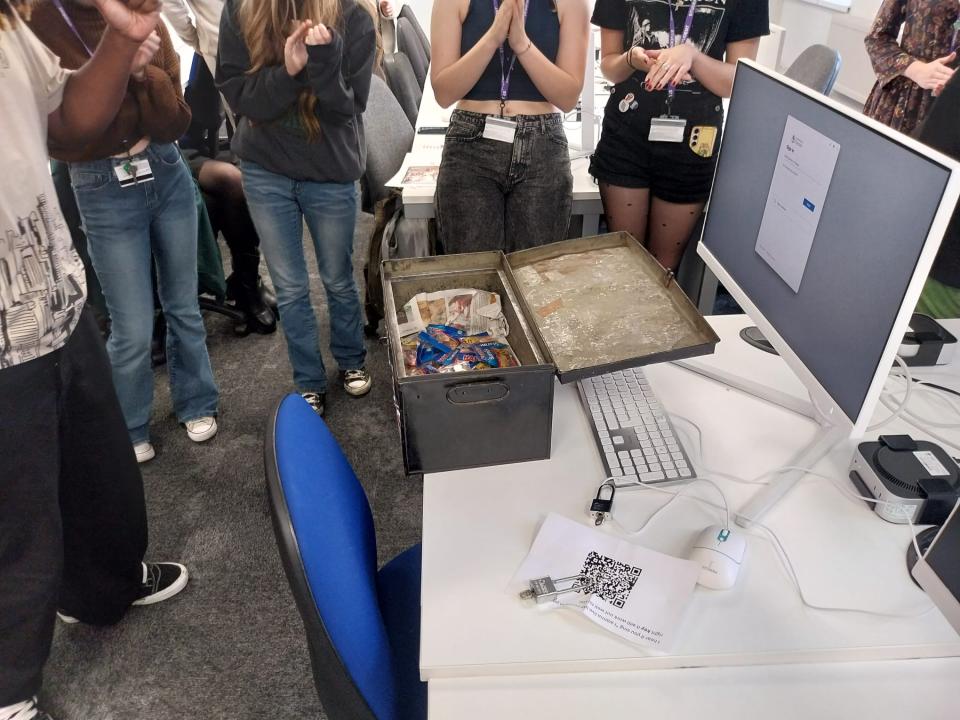
A quiet classroom is a familiar scene to many teachers, especially during the early weeks of term. So how can we get students interacting with each other while encouraging active learning and bringing fun into the classroom? An escape room, which requires students to solve puzzles, open locks and complete digital activities in groups, creates an informal learning environment that fosters problem-solving skills.
This resource offers tips on how to incorporate this games-based learning method into undergraduate teaching and how to tailor it to different levels of study.
How do escape rooms work in higher education?
Our escape room contains several small tasks related to specific programmes of study. Each task involves a short activity that, when completed, moves students one step closer to the end goal. Many tasks give them a key, code or password to open up a follow-on task or activity – this keeps it engaging, because each task is different. The escape room culminates in a final task – something more challenging that leads students to a reward, such as a chest full of sweets or a pre-recorded video congratulating them.
- Spotlight guide: How to motivate students and staff in higher education
- Tackling declining attendance with the ‘show up’ mindset
- Say goodbye to bored students
A tailored approach
You can tailor an escape room to different levels of study by adjusting the skills focus or the purpose. For example:
For first-year students: use an escape room to break the ice and get new students to talk to and work together. You can also design it to build good academic habits, such as checking their university email, using the library catalogue and locating teaching rooms on campus.
For second-year students: you can run an escape room as a reflective exercise. For example, ask education students how this exercise differs from a conventional lesson and whether they would take any aspects of the activity into their future teaching practice.
For third-year students: tasks become more sophisticated and can include more analysis and advanced discussion. This will suit some disciplines more than others and require careful design.
You can also tailor escape rooms to suit a diverse range of personalities. For example, we combined digital and in-person activities to cater to more outgoing students who tend to engage in physical activities, and more reserved students who gravitate to online activities. More extroverted students can also take leading roles and introverted students can relay information.
Some students preferred a competitive, timed approach that required them to beat previous winners, which created extra incentive. Others found a strict time limit stressful.
Essential escape room tools
• Virtual learning environment: we use Moodle.
• Quizzes: good for engagement and easy to customise for different subject matter.
• The ‘restrict access’ function: this allows you to lock access to material until students have done other activities. This allows you to ask students to revisit learning content, strengthening knowledge retention.
• The H5P online platform: this offers interactive tools, such as a crossword, augmented reality scavenger hunt and a “fill in the blanks” quiz.
• Padlocks: clues should point students to locked objects, for which they must then work out the code or solve another puzzle to receive a key. Padlocks can open with either a combination or keys. Diversify them by using number locks, directional locks, lettered locks and coloured locks to mix things up. They’re best used after an online task to get students “back in the room”.
• Unused classroom items: look for things that you can drill a hole through and attach a padlock to, such as boxes and lever arch files. We learned this tip from our local escape room company.
Tips for implementing escape rooms in the classroom
• Don’t overcomplicate it!
• You can repurpose this activity for a range of contexts. We’ve tried it in history, music and medicine courses and to educate students about library services.
• Move between student groups to keep the energy up and encourage them to persevere.
• Reuse items from the office or home and share them across subject areas.
• The more you do beforehand, the easier the set-up and delivery will be on the day. Do a test run to iron out any issues; we asked a colleague to complete the tasks in order and timed them.
• Create and print a list of answers to each puzzle, along with useful clues to help the students if they get stuck.
• Consider diverse student needs. Medicine students, for example, may thrive within a timed and competitive environment, while others may find this stressful. Anxious students may wish to observe and reflect on the skills their peers are building.
• Engage with experts in gamified learning, either within your institution or external companies such as Escapism.
Rebecca Andrew is a senior lecturer in history and a university innovation fellow at the University of Chester’s Centre for Academic Innovation and Development. Sam Chadwick is a senior learning technologist at the University of Chester’s Centre for Academic Innovation and Development.
If you would like advice and insight from academics and university staff delivered direct to your inbox each week, sign up for the Campus newsletter.



comment