

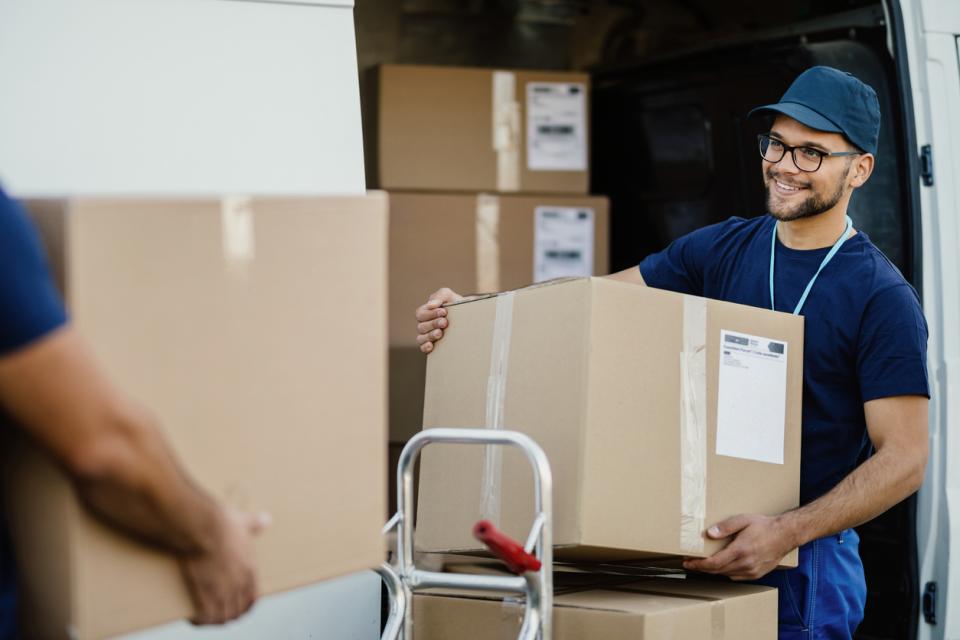
In research laboratories, scientific discovery relies on a steady stream of lab consumables, often resulting in multiple daily deliveries; high volumes of vehicle traffic; duplicated orders and inefficient use of space.
But changing the way we work without negatively impacting the science can feel unrealistic.
At our central London research facility, home to over 500 researchers and approximately 120 labs, we cut deliveries from 70 to just four per day.
Queen Square House is a hive of activity, with hundreds of people coming and going all day: patients, families, carers, doctors and allied professionals and, unsurprisingly, delivery drivers.
With a move to an even busier location on Gray’s Inn Road planned in 2028, it was imperative for the institute to change the way it worked. After implementing a number of changes to the way we order and receive items on site, these initiatives have been rolled out across the university.
By cutting down deliveries, you can lower your lab’s carbon footprint, reduce clutter and admin and free up researchers to focus on what really matters: discovering new cures and treatments.
Creating a central logistics hub to consolidate deliveries off-site
We developed a disused and damp area originally considered unsuitable for operational use to create a central logistics hub.
Previously, multiple suppliers delivered directly to labs throughout the day. Now deliveries are received centrally, logged in a fully tracked system, consolidated and redistributed by staff using electric vehicles or on foot, dramatically reducing delivery vehicle traffic between laboratory buildings.
The logistics hub also introduced managed-storage and “call-off” ordering, allowing departments to bulk order supplies that could then be distributed in smaller quantities as required. As laboratories no longer needed to store excess stock, this released valuable research space and reduced waste.
Build trust with research teams
Although the model is now widely embedded, early implementation faced resistance from departments accustomed to direct-to-building deliveries. Concerns centred on efficiency, responsiveness and potential disruption to established working practices.
Early engagement and active listening proved critical in shaping the service and building confidence in the new approach, while pilot schemes demonstrated the reliability of the model. The logistics team held regular meetings with researchers, lab managers and operational teams to understand the needs of each laboratory.
For other institutions considering similar initiatives, early stakeholder engagement, clear expectation management and small-scale pilots can help embed new ways of working successfully.
- Spotlight guide: Greener lab practices in higher education
- How can we improve the sustainability of labs?
- Greener life science labs - the challenge to save energy and reduce waste
One of the main concerns raised by researchers during the transition was the handling of temperature-sensitive items, including reagents and biological materials.
To address this, the logistics hub introduced refrigerated and controlled-temperature storage, ensuring that sensitive deliveries could be stored safely until onward distribution. Staff implemented strict KPIs to ensure refrigerated deliveries reached laboratories within two hours and non-refrigerated items within four hours.
The pilots quickly demonstrated benefits beyond sustainability. Researchers experienced fewer interruptions from couriers entering lab areas, reception desks became less congested and laboratories reclaimed valuable space previously used for storing excess consumables and packaging. Cleaner, tidier workspaces and a reduced administrative burden improved the working environment for both researchers and support staff.
No delivery driver leaves empty-handed
As part of routine delivery rounds, we introduced a reverse logistics service, ensuring vehicles never returned empty. Used gel packs, pipette tip boxes and other recyclable laboratory materials were collected directly from labs and returned to the hub for recycling or reuse.
Buy only what you need
Installing scientific vending machines stocked with commonly used consumables has also contributed to bringing down the number of daily deliveries.
Working closely with suppliers, including Promega Corporation and Thermo Fisher Scientific, we developed a more sustainable replenishment model: suppliers agreed to replenish smaller quantities within consolidated weekly orders as needed. This removed the need for departments to bulk buy individual items.
The results included reduced excess stockholding, lowered packaging waste and improved financial efficiency.
Suppliers also committed to once-weekly consolidated deliveries and, where possible, sourcing products from European stockists rather than global distribution routes, which helped cut transport emissions and improve supply chain resilience.
In-house ordering
Our next focus is to develop an internal “e-shop” that allows researchers to order commonly used lab items directly from our logistics team, who will buy in bulk to negotiate better prices and store them off-site.
Combining smarter procurement, centralised logistics and sustainable supplier partnerships significantly improved sustainability without compromising research performance.
The pilot’s success paved the way for new ways of working across the university. And in many cases, the changes have improved operational efficiency, reduced disruption and given researchers more time to focus on scientific discovery.
Kully Sunner is operations lead for the IoN-DRI Programme, Stephen Shine is logistics and mail services manager and Kelly Newman is logistics manager, all at UCL.
If you would like advice and insight from academics and university staff delivered direct to your inbox each week, sign up for the Campus newsletter.
comment