

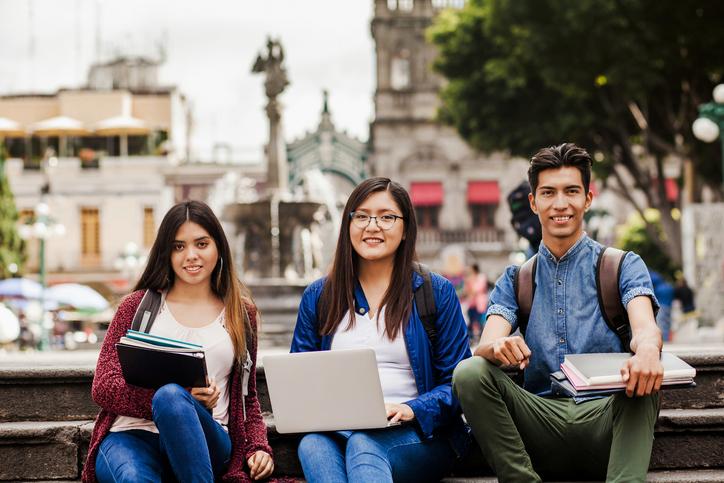
I celebrate cultural diversity in my classroom. It is not unusual for international students to make up half a group. While many come from our neighbour, the US, our international focus and global programmes bring students from many other parts of the world as well.
Across the campuses of my university, you can find Swedish, Korean, Indian and Chinese students studying alongside a large number of Americans, who themselves represent a diverse mix of backgrounds and regions. Mexican students welcome them with open arms; we have a reputation for hospitality. However, teaching in a higher education environment like this comes with its challenges.
The border between Mexico and the US is a fantastic place to study international business. Every day, tens of thousands of people cross between Tijuana, Baja California, and San Diego, California. Further east, Port Laredo is the busiest US land port by trade value.
Coordinating this programme in such a location provides a window into this vast international environment. Not only do we welcome students from all over the world, but many guest lecturers also teach our classes remotely from their home countries.
Although English naturally becomes the bridge connecting students and lecturers, my first recommendation is to remain open to other languages. Multilingualism is a real asset in this environment. Beyond language, however, lies the broader issue of multiculturalism. With that in mind, here are recommendations.
Listen carefully. Pronunciation and accents are often the first challenge for a professor who must not only communicate clearly but also understand questions, comments and feedback. This applies even to native English speakers. Active listening is essential. I always make a point of ensuring that I have fully understood what a student is trying to express before responding.
It is equally important to engage with students beyond the classroom. Within appropriate institutional boundaries, taking part in networking opportunities and informal campus interactions helps us become familiar with different accents and communication styles while also gaining a deeper understanding of students’ cultural backgrounds.
Do your homework. One practice I always follow is to learn as much as possible about incoming students before they arrive: where they come from, their academic backgrounds, interests and needs that I should be aware of.
- Spotlight guide: Support student success in the multilingual classroom
- How to support multilingual international students in the classroom
- Move beyond one-size-fits-all education for international students
As a rule, I make every effort to pronounce students’ names correctly. While not everyone will view a mispronunciation as disrespectful, getting a name right is a simple but meaningful way to build trust and establish communication. I once had an Australian student whose name I found difficult to pronounce. It took practice, but I eventually mastered it. She greatly appreciated the effort, and it became a small but powerful demonstration of the empathy and cultural awareness that educators should strive to show.
Ask what students need. Many students at our university live or work in the United States and commute to Mexico for their studies. Being aware of their scheduling needs is essential, especially since crossing the border can take a considerable amount of time depending on the day and hour.
Pay attention to religious and dietary needs. Throughout my teaching career, we have helped students and visiting professors find places of worship and locate specific food options, ranging from kosher meals to traditional Asian cuisine. Among some Indian professors, for example, sharing an Indian meal is often an important step towards building friendship and trust.
Tijuana benefits from being a true cultural melting pot, while Mexicali is one of the best places in North America to enjoy Chinese cuisine.
In other cases, students arrive eager to experience Mexican culture and food in all its variety. Fortunately, Mexican students are usually more than willing to help. Even so, it never hurts to remind them to recommend healthy options and to be very clear about the intensity of chillies and other spicy ingredients.
Acknowledge different learning styles. Approaches to higher education vary significantly from one country to another. The differences between the Mexican and American education systems, for example, should not be underestimated, particularly since some of our students come directly from high school.
This is especially relevant for many East Asian students, who are often educated in more hierarchical education systems that place value on strict adherence to course plans and clearly defined grading systems. If you are a professor who prefers a more flexible teaching style, make sure this is communicated clearly from the very beginning of the course.
Finally, it is important to remain attentive to students’ physical and mental well-being. After all, they are young people adapting to a new environment, and some adjust more easily than others.
Teaching in a multicultural programme means serving not only as an academic but also as a host. It is an extraordinarily rewarding experience and one of the most enriching ways to engage with diversity daily.
Raúl Martínez Flores is coordinator of the bachelor’s degree in international business (global programme) at CETYS University, Mexico.
If you would like advice and insight from academics and university staff delivered direct to your inbox each week, sign up for the Campus newsletter.



comment