


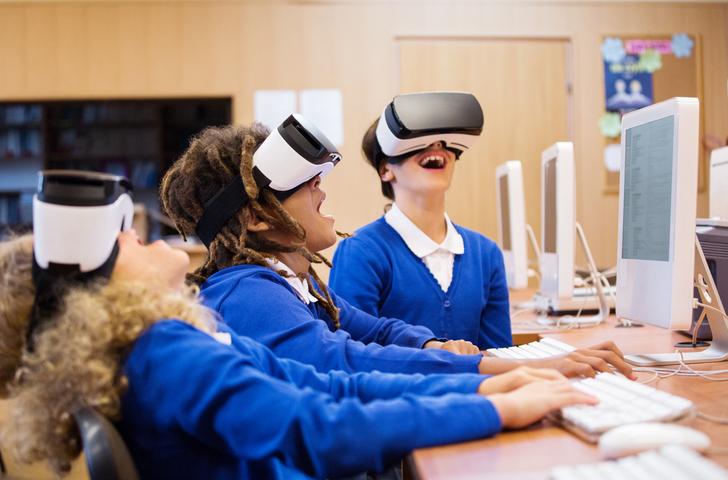
University outreach often follows a familiar pattern: a researcher visits a school, gives a talk, shows slides and hopes pupils can imagine themselves in that world. This can work well, but for many subjects the most exciting parts are hard to convey in a classroom. Pupils may never see the laboratories, studios, clinics, field sites, instruments or professional spaces that define a discipline.
Outreach is not just about raising awareness. It is about helping young people understand what university study feels like, why it matters and whether it could include them. If outreach remains abstract, it risks favouring pupils who already have the confidence, knowledge or cultural capital to picture themselves in higher education. Virtual reality (VR) can make outreach more experiential. Instead of telling pupils about a laboratory, studio or professional environment, we can let them step inside a digital version of it. The aim is not to impress pupils with technology; it is to make these disciplines feel more tangible and accessible.
Start with what schools need
Teachers are working within curriculum pressures, limited time and varying levels of pupil confidence. Ask whether the school needs a careers activity, curriculum-linked science session, literacy task, transition-to-university experience or support for pupils who may not see university as something “for them”. The strongest outreach fits within the curriculum and gives teachers a richer way to bring it to life. A virtual laboratory, for example, can support chemistry, biology, health, sustainability, data handling and careers. A virtual studio can support creative practice, portfolio thinking and conversations about future study.
Make pupils participants, not spectators
VR is most valuable when pupils must do something. They might explore a digital twin of a university building, enter a virtual laboratory, visit a design studio, navigate a healthcare training space or meet an AI avatar who explains different roles. This is especially useful for technical, niche or misunderstood subjects. Many pupils have heard of medicine or engineering, but fewer understand pharmaceutical science, analytical chemistry, formulation, digital health, bioscience apprenticeships, conservation, architecture or fine art practice.
Build small decisions into the experience. Ask pupils to choose equipment, identify a safety issue, interpret a result, design an object, respond to a patient scenario or solve a problem. Outreach becomes more powerful when pupils are treated as active learners rather than an audience.
- Spotlight guide: The secrets of successful university outreach
- What is needed to run a successful outreach programme?
- How to bring university science into primary schools
Co-create with teachers and pupils
Teachers understand age, curriculum level, classroom realities and the language that will land with pupils. Pupils can tell you what feels exciting, confusing or intimidating. Co-creation can be simple. Share an early version with a small group and ask: What did you understand? What felt too technical? What made university seem more accessible? What would you change? This flattens hierarchies and improves the experience.
Plan for real school infrastructure
Technology should remove, not create barriers. If a VR session depends on a strong wi-fi connection, expensive hardware or specialist technical support, it will not be suitable for all schools. Some have restricted networks, weak coverage in halls or safeguarding filters that block platforms needed for immersive learning. Plan for this from the start.
Portable connectivity, including systems such as Starlink, can allow university teams to run sessions where school wi-fi is unreliable. Connectivity should be treated as part of access. A mobile headset kit, pre-tested network option, offline backup and simple reset process can make the difference between a one-off demonstration and a repeatable outreach model.
Measure more than enjoyment
Outreach success should not just be measured by smiles. Ask what changed. Did pupils understand a subject better? Could they name new career routes? Did they feel more confident asking questions? Did teachers see curriculum value? Did the session reach pupils who do not usually attend university events? Short pre- and post-session questionnaires, teacher feedback, pupil reflections, repeat school bookings and requests for follow-up resources are good data sources.
Design for reuse
You can reuse a VR outreach activity across year groups, schools, open days, widening participation programmes and community events. It can also support pupils who cannot easily travel to campus.
A digital university space can be adapted, extended and shared. It can connect pupils with students, researchers, technicians, artists, clinicians and industry partners.
More tips on delivering effective VR outreach
• Keep the first activity small. One space, one task and one clear learning outcome is enough.
• Have an offline backup. A non-networked VR version, video walkthrough or laptop-based version can save the session if connectivity fails.
• Use AI avatars carefully. They are useful for guidance, multilingual support and explaining different roles, but they should not replace human interaction.
• Ask teachers what worked. Their feedback will tell you whether the activity genuinely supports curriculum, confidence and aspiration.
• Leave something behind. Give schools a worksheet, QR code, video link or follow-up task so the outreach continues after the visit.
The future of outreach relies on creating meaningful encounters with different disciplines. When we use VR to help young people step into them, a university education becomes easier to imagine – and easier to aspire to.
Stephen Hilton is VR lead in the School of Pharmacy at UCL. Blanka Hilton is VR lead for the science degree apprenticeship in the School of Biosciences at the University of Kent.
If you would like advice and insight from academics and university staff delivered direct to your inbox each week, sign up for the Campus newsletter.

comment2
(No subject)
(No subject)